The most common signs you need to see a dentist include bleeding gums, persistent tooth pain, bad breath that will not go away, and unusual white spots on your teeth or inside your mouth. These symptoms often indicate early-stage conditions that are straightforward to treat when caught quickly but can escalate into serious problems if ignored.
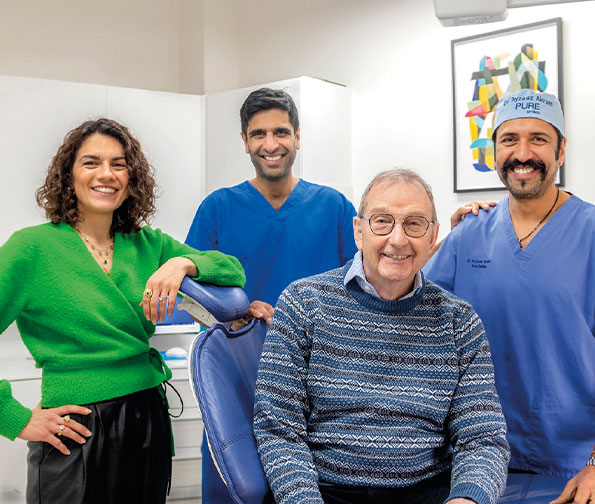
At Pure Smiles in Fulham, Dr Ayzaaz Akram (BDS Liverpool 1995, GDC 70996) and the team see patients every week who wish they had come in sooner. Whether you visit our New Kings Road or Fulham Road practice, early detection is always easier, less invasive, and less expensive than late treatment.
Below is a quick-reference table grouping all 12 signs by category, followed by detailed explanations of each.
| Category | Warning Sign | Possible Cause | Urgency |
|---|---|---|---|
| Gum-Related | Puffy or bleeding gums | Gingivitis, periodontitis | High |
| Metallic taste in mouth | Gum disease, medication side-effect | Medium | |
| Persistent bad breath | Bacterial build-up, poor hygiene | Medium | |
| Pain-Related | Tooth or gum pain | Decay, infection, abscess | High |
| Pain when chewing | Cracked or fractured tooth | High | |
| Sensitive teeth | Enamel erosion, gum recession | Medium | |
| Soft Tissue Changes | Soreness or swelling | Trauma, infection, oral cancer | High |
| Lumps and bumps | Trauma, cyst, oral pathology | Medium-High | |
| Visual Signs on Teeth | White spots on teeth | Early decay, fluorosis | Medium |
| Teeth grinding (bruxism) | Stress, bite misalignment | Medium | |
| Visual Signs Inside Mouth | White patches inside mouth | Oral thrush, leukoplakia | Medium |
| Discolouration or dark spots | Decay, staining, trauma | Medium |
If you recognise any of these signs, call Pure Smiles on 020 7736 6276 or learn more to book an appointment.
Bleeding gums are not normal. If your gums bleed when you brush or floss, this is typically a sign of gingivitis, the earliest stage of gum disease. Gingivitis is caused by plaque build-up along the gumline and is reversible with professional cleaning and improved home care.
Left untreated, gingivitis progresses to periodontitis. Periodontitis is not reversible and can lead to bone loss and tooth loss. The NHS estimates that most adults in the UK have some degree of gum disease, yet many do not realise it because the early stages are painless.
At Pure Smiles, our learn more hygiene team provides thorough scale-and-polish treatments at both our Fulham practices to halt gum disease before it advances.
A persistent metallic or bloody taste can indicate active gum disease, particularly if it occurs alongside bleeding when brushing. This taste is caused by blood seeping from inflamed gum tissue.
A metallic taste is not always dental in origin. It can be a side-effect of certain medications, vitamin supplements, or early pregnancy. However, if the taste persists for more than a few days and you have not changed any medication, you should book a dental check-up.
Chronic bad breath, known clinically as halitosis, is one of the most common signs you need to see a dentist. It is usually caused by bacteria accumulating on the teeth, tongue, and gums due to inadequate brushing and flossing.
Bad breath is not just a hygiene issue. It can also signal untreated cavities, gum disease, or even a systemic health condition. If improved brushing, flossing, and tongue cleaning do not resolve the problem within a week, a professional assessment is the next step.
Our Fulham hygienists offer tailored oral hygiene advice and deep cleaning to address the root cause. learn more
Tooth pain is your body’s clearest signal that something is wrong. The pain may be sharp, throbbing, or intermittent, but none of these patterns should be dismissed. Common causes include untreated cavities, cracked teeth, abscesses, and exposed tooth roots.
Dental pain does not resolve on its own. A cavity will continue to grow, and an infection can spread to surrounding tissue or enter the bloodstream. Pure Smiles offers learn more emergency appointments in Fulham for patients experiencing acute pain.
If biting down on food causes a sharp or lingering pain, you may have a cracked tooth. Cracks are not always visible to the naked eye but will show up on a dental X-ray. A cracked tooth is not something that heals naturally, and delaying treatment increases the risk of the tooth splitting further, potentially requiring extraction.
Most cracked teeth can be saved with a crown if treated promptly. Dr Akram and the Pure Smiles team assess cracked teeth using digital imaging at both our SW6 locations.
Tooth sensitivity to hot, cold, or sweet foods and drinks is a sign that the protective enamel layer is thinning or that gum recession has exposed the tooth root. Sensitivity is not a condition you should simply tolerate. It often worsens over time without intervention.
Your dentist may recommend a desensitising toothpaste, fluoride varnish, or a filling to protect the exposed area. If gum recession is the cause, further investigation into the underlying reason is essential.
Mouth sores caused by biting your cheek or burning the roof of your mouth on hot food are common and usually heal within 7 to 10 days. However, any sore or swelling that persists beyond two weeks should be assessed by a dentist.
Persistent mouth sores can be a symptom of oral cancer. Oral cancer is not always painful in its early stages, which is why routine screening matters. At Pure Smiles, oral cancer screening is part of every routine check-up at our Fulham practices. Early detection significantly improves outcomes.
Small lumps inside the mouth are often caused by accidental biting or irritation and typically resolve on their own within a week or two. A lump that does not heal, grows larger, or bleeds is not something to ignore.
While most oral lumps are benign, some can indicate cysts, fibromas, or other pathology that requires investigation. A dentist can determine whether a biopsy or referral is needed.
White chalky spots on the tooth surface are often the first visible sign of tooth decay. They indicate areas where minerals have leached from the enamel due to acid produced by plaque bacteria.
At this stage, decay is reversible. Fluoride treatments, improved brushing technique, and dietary changes can remineralise the enamel before a cavity forms. White spots are not always decay-related. In children, they can result from fluorosis caused by swallowing toothpaste during tooth development.
Bruxism is the medical term for habitual grinding or clenching of the teeth, most commonly during sleep. Signs include waking with a sore jaw, headaches, or worn-down tooth surfaces. You may not realise you grind your teeth until a dentist spots the characteristic wear patterns.
Teeth grinding is not harmless. Over time, it can crack teeth, damage dental restorations, and cause temporomandibular joint (TMJ) pain. A custom-fitted night guard from your dentist is the most effective protection.
Dr Akram is also a qualified clinical hypnotherapist and offers learn more hypnotherapy for bruxism and dental anxiety at Pure Smiles, providing a complementary approach alongside traditional treatments.
White patches on the inner cheeks, tongue, or gums may indicate oral thrush, a fungal infection caused by an overgrowth of Candida. Thrush is not dangerous but does require treatment, usually with antifungal medication prescribed by your dentist or GP.
Oral thrush is more common in patients who wear dentures, take antibiotics long-term, use steroid inhalers, or have a dry mouth. If white patches appear alongside other symptoms such as difficulty swallowing, prompt assessment is recommended.
Dark spots, grey areas, or brown staining on teeth can indicate active decay, old trauma, or excessive staining from tea, coffee, or tobacco. Discolouration is not always cosmetic. A dark spot on a single tooth may signal that the nerve inside has died, requiring learn more root canal treatment.
Your dentist can determine whether the discolouration is superficial staining that responds to professional cleaning or a structural issue that needs restorative treatment.
Not all warning signs carry the same urgency. You should seek same-day or emergency care if you experience:
Pure Smiles provides learn more emergency dental care in Fulham. Call 020 7736 6276 to speak with our team. We welcome both registered and new patients at our two South West London locations:
The NHS recommends dental check-ups every 6 to 24 months depending on your risk level. Most adults benefit from a check-up every 12 months and a hygiene appointment every 6 months. Regular visits allow your dentist to catch problems before symptoms appear.
Mild gum inflammation can improve with better brushing and flossing, but bleeding gums that persist for more than two weeks should be assessed professionally. Gingivitis is treatable, but periodontitis is not reversible and requires ongoing management.
No. Tooth sensitivity is not always caused by decay. It can result from enamel erosion, gum recession, teeth grinding, or even overly aggressive brushing. Your dentist will identify the specific cause and recommend the appropriate treatment.
See a dentist first. Dentists are trained to screen for oral cancer and assess soft tissue changes inside the mouth. If the sore requires medical treatment beyond dental care, your dentist will refer you to the appropriate specialist.
Yes. Dr Ayzaaz Akram is a qualified clinical hypnotherapist and offers hypnotherapy alongside traditional dentistry to help nervous patients feel comfortable. Pure Smiles has been a family-run practice in Fulham since 2009, and our team is experienced in supporting anxious patients of all ages. learn more