No, root canals are not as bad as their reputation suggests. Root canal treatment is a routine procedure that saves infected teeth, eliminates pain and prevents the need for extraction. The myths surrounding root canals — that they are agonising, that pulling the tooth is better, or that you will always know when you need one — are outdated or simply wrong.
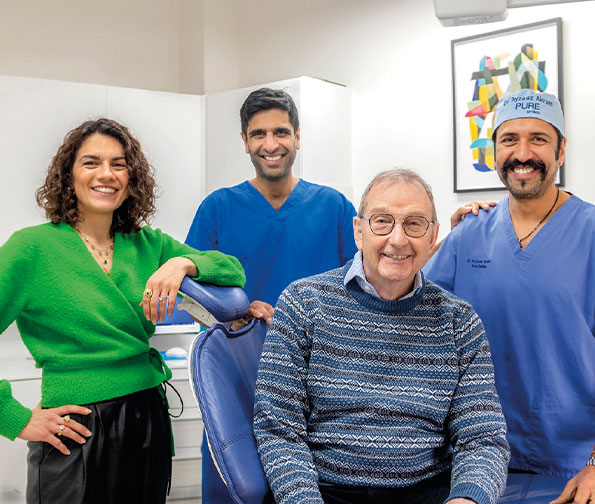
At Pure Smiles in Fulham, we perform root canal treatment regularly and find that most patients are surprised by how straightforward the experience is. Below, we address the three most common myths and explain what root canal treatment actually involves.
This is the most persistent myth about root canals, and it is not true with modern dentistry. Root canal treatment is performed under local anaesthetic, which completely numbs the affected tooth and surrounding area. You should not feel pain during the procedure.
The purpose of a root canal is to remove the infected or inflamed pulp — the soft tissue inside the tooth that contains nerves and blood vessels. Once the pulp is removed, the pain caused by the infection stops.
| Stage | What Happens | What You Feel |
|---|---|---|
| Anaesthetic | Local anaesthetic is administered to numb the area | A brief pinch from the injection |
| Pulp removal | The infected pulp is carefully removed from inside the tooth | Nothing — the area is fully numb |
| Cleaning and shaping | The root canals are cleaned, disinfected and shaped | Nothing — the area is fully numb |
| Filling | The canals are filled with a biocompatible material (gutta percha) | Nothing — the area is fully numb |
| Restoration | A crown or filling is placed to protect the treated tooth | Nothing — the area is fully numb |
Some mild discomfort or tenderness is normal for a few days after the anaesthetic wears off. Over-the-counter painkillers such as ibuprofen or paracetamol are usually sufficient. Most patients describe the post-treatment soreness as similar to having a filling — significantly less than the toothache that prompted the treatment in the first place.
If discomfort persists beyond a week or worsens, contact Pure Smiles for a review. learn more
Preserving your natural tooth is almost always the better option. Tooth extraction is not a simpler alternative to root canal treatment. It is a last resort that creates additional problems — and costs — down the line.
When a tooth is extracted, the gap left behind causes several issues over time:
Root canal treatment performed at a reputable practice has a success rate above 90%. With proper oral hygiene and a well-fitted crown, a root canal treated tooth can last as long as your natural teeth. learn more
This is sometimes true, but not always. Many patients with infected tooth pulp experience clear symptoms — throbbing pain, prolonged sensitivity to hot or cold, swelling around the tooth, or a persistent bad taste. These symptoms prompt a dental visit and the infection is identified.
However, some infected teeth produce no noticeable symptoms at all. The infection develops slowly, the nerve dies gradually, and the patient feels little or no pain. This is known as a “silent” infection, and it can only be detected through dental examination and X-ray imaging.
| Symptom | What It May Mean |
|---|---|
| Severe, persistent toothache | Pulp infection or inflammation |
| Prolonged sensitivity to hot or cold (lasting more than 30 seconds) | Nerve damage within the tooth |
| Darkening of the tooth | The pulp has died and the tooth is discolouring |
| Swelling or tenderness in the gum near the tooth | Abscess forming at the root tip |
| A small pimple (sinus tract) on the gum | Drainage point for a chronic abscess |
| No symptoms, but infection visible on X-ray | Silent infection requiring treatment |
This is precisely why regular dental check-ups matter. At Pure Smiles, we take X-rays and perform thorough examinations at routine appointments, catching infections before they cause pain or require emergency treatment. learn more
Whether you are experiencing tooth pain or simply overdue for a check-up, Dr Ayzaaz Akram (BDS Liverpool 1995, GDC 70996) and the team at Pure Smiles provide thorough, gentle dental care at both our Fulham practices.
Contact us on 020 7736 6276 or visit us at 257 New Kings Road, SW6 4RB or 750a Fulham Road, SW6 5SH. learn more
Most root canal treatments at Pure Smiles are completed in one to two appointments, each lasting 60 to 90 minutes. Front teeth with a single root canal are quicker to treat than molars, which may have three or four canals. Your dentist will advise on the expected number of visits at your consultation.
A root canal treated tooth can last a lifetime with proper care. The key factors are a well-sealed filling or crown to protect the treated tooth, good daily oral hygiene and regular dental check-ups. Without a crown, a root canal treated back tooth is more vulnerable to fracture.
Root canal treatment is available on the NHS as a Band 2 treatment. However, NHS treatment may have limitations in terms of the materials and techniques used. At Pure Smiles, private root canal treatment provides more time, advanced materials and a dedicated approach to give the treated tooth the best possible long-term prognosis.