Root canal treatment is a common procedure used to save a tooth when the inner pulp becomes infected. However, some patients prefer to explore holistic or alternative approaches before committing to conventional root canal therapy. At Pure Smiles in Fulham, we believe in discussing all available options so you can make an informed decision about your dental care.
Root canal alternatives are not a replacement for professional dental advice. They are additional options that may be appropriate depending on the severity of your condition and your individual circumstances.
It is important to understand that once infection has reached the tooth pulp, the tooth will not heal on its own. Delaying treatment can lead to abscess, bone loss and the eventual need for extraction. Any alternative approach should be discussed with your dentist before proceeding. learn more
The most effective alternative to root canal treatment is prevention. Holistic dentistry emphasises the connection between oral health and overall body health, focusing on diet, lifestyle and early intervention to avoid the conditions that lead to root canal problems in the first place.
| Dietary Action | How It Helps |
|---|---|
| Reduce sugar intake | Sugar feeds the bacteria that cause tooth decay and pulp infection |
| Limit acidic foods and drinks | Acid erodes enamel, exposing the softer dentine beneath |
| Increase vegetable consumption | Nutrient-rich foods support strong teeth and healthy gums |
| Eat calcium-rich foods | Calcium strengthens enamel and supports jawbone density |
| Stay hydrated with water | Water rinses away food particles and maintains saliva production |
A holistic dentist will typically recommend dietary changes as a first-line measure. The logic is straightforward: if you remove the primary causes of tooth decay — sugar and acid — you significantly reduce the likelihood of infection reaching the tooth pulp.
When decay has progressed but has not yet caused irreversible pulp damage, several alternatives may be considered.
Calcium hydroxide is an alkaline material that can be applied to a tooth to dissolve dead tissue and disinfect the area. It is sometimes used as an alternative to full root canal treatment, particularly in cases where the infection is limited. The material irrigates the tooth and may promote natural healing of the surrounding tissue.
This approach is not suitable for all cases. It is most effective when decay is caught early, before the infection has fully compromised the pulp.
If preserving the natural tooth is not viable, holistic extraction followed by a zirconia implant is an option some patients prefer over root canal therapy. Zirconia is a biocompatible ceramic material that looks and functions like a natural tooth.
| Feature | Zirconia Implant | Titanium Implant |
|---|---|---|
| Material | Ceramic (zirconium dioxide) | Medical-grade titanium |
| Biocompatibility | Metal-free; suitable for patients with metal sensitivities | Highly biocompatible; well-established track record |
| Appearance | White; does not show through thin gums | Grey; may show through thin or receding gums |
| Strength | Strong but slightly less flexible than titanium | Extremely strong and flexible |
| Osseointegration | Bonds with jawbone effectively | Gold standard for bone fusion |
The choice between zirconia and titanium is a personal one. Your dentist can advise which option best suits your clinical situation and preferences. learn more
Understanding what root canal treatment involves helps you weigh it against the alternatives.
Root canal treatment is needed when bacteria penetrate through the enamel and dentine into the pulp chamber — the innermost part of the tooth containing nerves and blood vessels. This causes infection, inflammation and often significant pain.
1. Diagnosis — A dental X-ray confirms that the pulp is infected
2. Local anaesthetic — The area is numbed so you feel no pain during the procedure
3. Access — The dentist drills into the top of the tooth to reach the pulp chamber
4. Pulp removal — The infected pulp tissue is carefully removed
5. Cleaning and shaping — The root canals are cleaned, disinfected and enlarged to accept a filling
6. Temporary filling — The tooth is sealed with a temporary filling to allow healing
7. Permanent restoration — At a follow-up appointment, the temporary filling is replaced with a permanent filling or crown
After treatment, the tooth may feel sensitive for a few days. Avoid hot drinks and sticky foods for the first two weeks to allow proper healing.
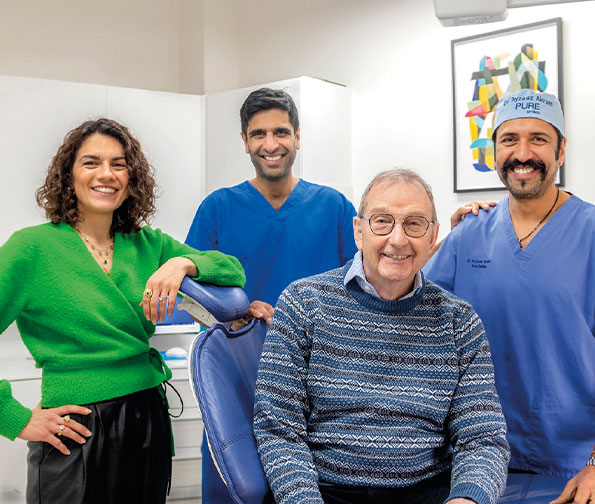
At Pure Smiles in Fulham, we accommodate your individual preferences. Dr Ayzaaz Akram (BDS Liverpool 1995, GDC 70996) takes a thorough, patient-centred approach to treatment planning — discussing all available options, including holistic alternatives, so you can make the choice that feels right for you.
Whether you prefer conventional treatment, a holistic approach or a combination of both, we are here to guide you. Book a consultation at either of our Fulham practices — 257 New Kings Road, SW6 4RB or 750a Fulham Road, SW6 5SH — by calling 020 7736 6276. learn more
In some cases, yes. If decay is detected early before it reaches the pulp, treatments such as fillings, inlays or calcium hydroxide therapy may save the tooth without a full root canal. However, once the pulp is irreversibly infected, root canal treatment or extraction are typically the only options. Regular dental check-ups are the best way to catch problems early.
Neither option is universally better — it depends on your individual situation. Root canal treatment preserves your natural tooth, which is generally preferred when possible. Holistic extraction removes the infected tooth entirely and replaces it with an implant. Both approaches have merits, and your dentist at Pure Smiles can help you weigh the pros and cons based on your specific case.
Zirconia implants are strong and durable, with good long-term clinical outcomes. They are slightly less flexible than titanium, which means they may be more prone to fracture under extreme force. However, for most patients and most positions in the mouth, zirconia implants perform very well. They are an excellent choice for patients who prefer a metal-free option.
Prevention centres on three fundamentals: maintain a consistent oral hygiene routine (brush twice daily, floss daily), eat a diet low in sugar and acid, and attend regular dental check-ups every six months. Early detection of decay is the single most effective way to avoid root canal treatment.