Yes, children can receive pulpotomy treatment. A pulpotomy is a common paediatric dental procedure that removes infected pulp from inside a primary (baby) tooth to eliminate pain, stop the spread of infection and preserve the tooth until it falls out naturally. It is sometimes referred to as a “baby root canal,” though the procedure is less extensive than a full root canal treatment on an adult tooth.
Parents often wonder whether treating a baby tooth is worth the effort, given that it will eventually fall out. The answer is that preserving primary teeth matters. Baby teeth hold space for the permanent teeth developing beneath them, support proper chewing and speech development, and prevent the adjacent teeth from shifting into the gap.
A pulpotomy involves removing the infected or inflamed portion of the pulp from the crown (top) of a tooth, while leaving the healthy pulp in the root canals intact. This is different from a pulpectomy, which removes all of the pulp including from the roots.
| Procedure | What Is Removed | When It Is Used |
|---|---|---|
| **Pulpotomy** | Infected pulp from the crown of the tooth only | When infection is limited to the upper portion of the pulp |
| **Pulpectomy** | All pulp from the crown and root canals | When infection has spread to the root pulp |
| **Extraction** | The entire tooth | When the tooth cannot be saved or is close to falling out naturally |
A pulpotomy is the most conservative option when the pulp has been compromised. It preserves the tooth’s root structure and the surrounding bone, which supports the development and eruption of the permanent tooth beneath.
The most common reason for a pulpotomy in children is deep tooth decay. When a cavity progresses through the enamel and dentine and reaches the pulp chamber, bacteria infect the soft tissue inside the tooth. This causes:
Children are particularly susceptible to deep decay in their primary molars because:
A pulpotomy addresses the immediate infection and pain while preserving the tooth for its remaining natural lifespan.
A pulpotomy is a straightforward procedure that is typically completed in a single appointment. Here is what to expect:
1. Local anaesthetic. The area around the tooth is numbed so that the procedure is painless. Your child will feel pressure but not pain.
2. Isolation. A rubber dam or similar barrier may be placed around the tooth to keep the area dry and prevent bacteria from entering.
3. Decay removal. The dentist removes the decayed portion of the tooth to access the pulp chamber.
4. Pulp removal. The infected pulp in the crown of the tooth is carefully removed. The healthy pulp remaining in the root canals is left intact.
5. Medication. A medicated dressing, typically a material containing formocresol or mineral trioxide aggregate (MTA), is placed over the remaining pulp to promote healing and prevent further infection.
6. Restoration. The tooth is sealed with a filling or, more commonly in children, a stainless steel crown to protect it and restore its shape and function.
The entire procedure typically takes 30 to 45 minutes.
Recovery from a pulpotomy is usually quick and straightforward.
Contact your dentist if your child experiences severe pain, facial swelling, fever or if the symptoms do not improve within a few days.
Prevention is always preferable to treatment. The following habits significantly reduce the risk of deep decay in children’s teeth:
Brush twice daily. For children too young to brush effectively on their own, parents should do the brushing. Use a fluoride toothpaste: a smear for children under three, a pea-sized amount for ages three to six.
Limit sugar intake. Check food and drink labels carefully. Many products marketed to children, including fruit juices, flavoured yoghurts and cereal bars, contain surprisingly high levels of sugar.
Regular dental visits. Children should see a dentist every six to nine months. These appointments allow decay to be caught early, often while it is still in the enamel and before it reaches the pulp. Early treatment is simpler, faster and less stressful for your child.
Encourage water as the main drink. Water does not cause decay and helps rinse bacteria from the mouth throughout the day. Limit juice and squash to mealtimes only.
Pure Smiles has been providing family dental care in Fulham since 2009. We treat children of all ages and understand that dental visits can be daunting for young patients.
Our approach to learn more children’s dentistry focuses on creating a calm, educational experience. We explain each step in language your child can understand, work at their pace and involve you as a parent in every treatment decision.
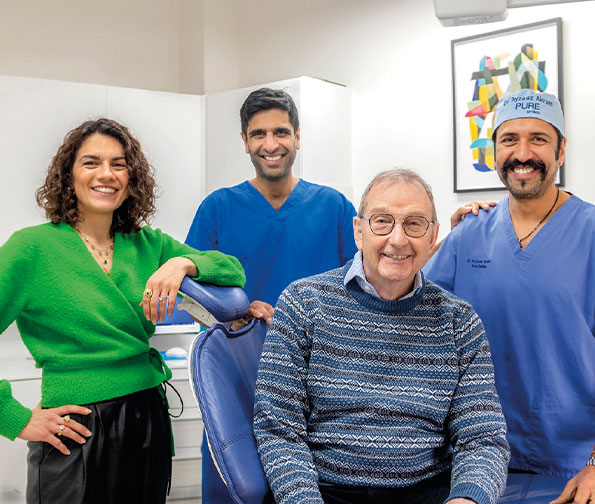
Dr Ayzaaz Akram (BDS University of Liverpool 1995, GDC 70996) leads our practice across two Fulham locations:
To book a children’s dental appointment, call us on 020 7736 6276 or learn more contact us online.
—
No. A local anaesthetic is used to numb the area before the procedure, so your child will not feel pain during treatment. Some mild soreness may occur after the anaesthetic wears off, which can be managed with children’s paracetamol or ibuprofen.
Extracting a baby tooth prematurely can cause the surrounding teeth to shift, closing the space needed for the permanent tooth to erupt correctly. This can lead to crowding, misalignment and the potential need for orthodontic treatment later. A pulpotomy preserves the tooth and its space-holding function until it is ready to fall out naturally.
A pulpotomy is typically completed in a single appointment lasting 30 to 45 minutes. The tooth is restored with a filling or crown during the same visit, so no follow-up appointment is usually required for the procedure itself.
A pulpotomy removes only the infected pulp from the crown of the tooth, leaving the healthy root pulp intact. A root canal (pulpectomy) removes all pulp from both the crown and the root canals. Pulpotomies are the more conservative option and are most commonly performed on primary teeth in children.
Children should have their first dental visit when their first tooth appears, or by their first birthday at the latest. Early and regular dental visits allow your dentist to monitor development, catch decay early and establish positive dental habits from a young age.