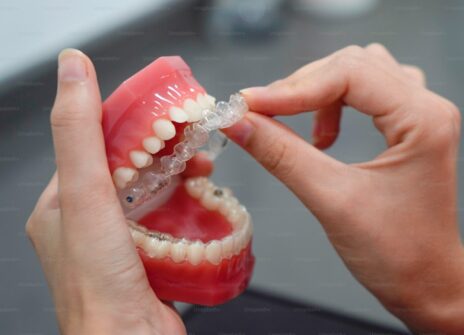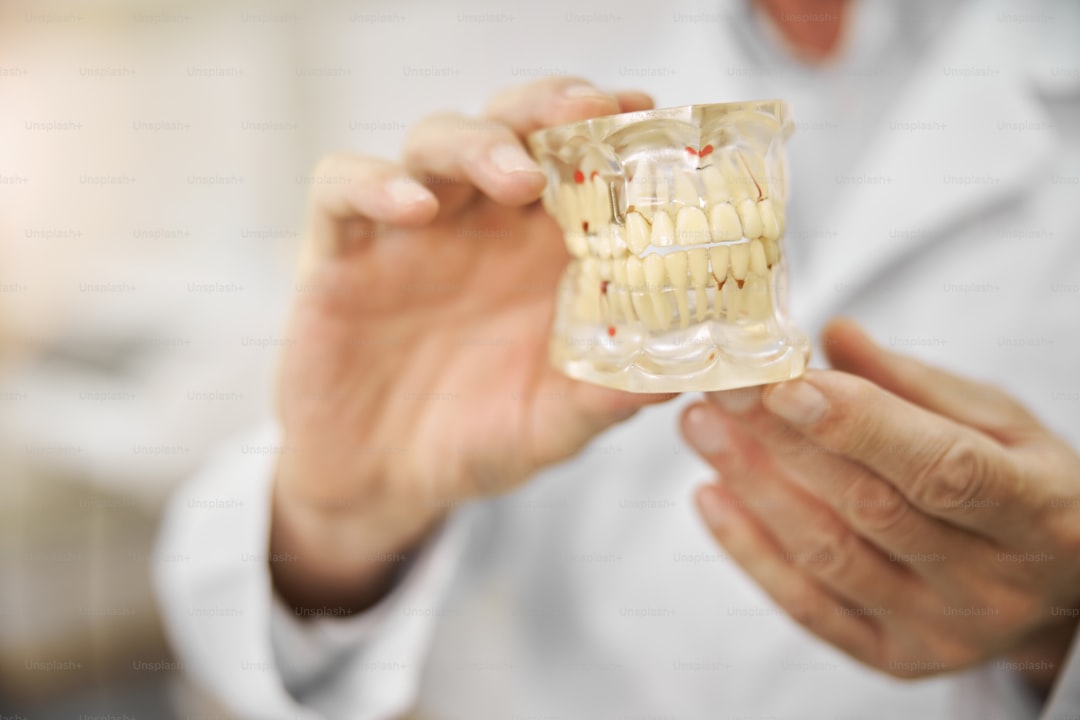
A dental implant is a titanium screw that replaces a missing tooth root, topped with a crown that stands alone. A bridge is a row of joined crowns anchored to the teeth either side of the gap. Implants preserve bone and protect neighbouring teeth; bridges are faster and cheaper upfront but require cutting down healthy adjacent teeth.
A dental implant is a three-part replacement that mimics a natural tooth from root to crown. A dental implant is not glued or clipped to anything — it integrates into bone (osseointegration) over 3–4 months.
A bridge, in contrast, fills the gap by using your existing teeth as anchors. The dentist files down (“preps”) the two adjacent teeth, takes an impression, and fits a fused unit of three or more crowns.
According to the National Institute for Health and Care Excellence, both treatments meet modern restorative standards — but the choice depends on bone health, adjacent tooth condition and budget.
For a step-by-step implant timeline, see our single tooth implant procedure guide.
| Treatment | Upfront cost | Lifespan | 30-year est. |
|---|---|---|---|
| Single dental implant + crown | £2,500–£4,500 | 20+ years (crown ~12) | £3,500–£6,500 |
| 3-unit conventional bridge | £1,800–£2,800 | 10–15 years | £4,500–£8,000 |
| Maryland (resin-bonded) bridge | £600–£1,200 | 5–10 years | £3,500–£7,000 |
The headline number favours bridges. The 30-year picture is closer to a tie, and implants often win on quality of life because they don’t depend on neighbouring teeth. For full pricing, read how much do dental implants cost in London 2026.
According to a 2024 Cochrane review of long-term restorative outcomes, dental implants demonstrate 10-year survival rates of 95–97%, while conventional bridges sit between 70% and 85% at the same interval. The crown component on an implant typically lasts 10–15 years and can be replaced without disturbing the underlying implant.
Bridges, by contrast, fail by either:
Once one anchor tooth fails, the whole bridge usually needs redoing — and the failed tooth may itself need extracting, turning a 1-tooth gap into a 2-tooth problem.
The biggest hidden difference between the two treatments is what happens to the bone where your tooth used to be.
According to the British Society of Periodontology, the jawbone loses approximately 25% of its width in the first year after a tooth extraction if nothing replaces the root. An implant does preserve bone by transmitting chewing forces through to the jaw, exactly like a natural tooth root. A bridge does not preserve bone — the gap underneath continues to resorb, and the bridge eventually develops a visible space underneath the false tooth (the “pontic”).
The second consideration is your neighbouring teeth. A bridge requires those teeth to be filed down — often removing 60–70% of their tooth structure to fit crowns. If those teeth are virgin (never filled), most modern dentists would steer you toward an implant to avoid sacrificing healthy tissue. If the adjacent teeth already have large fillings or crowns, a bridge becomes the more sensible option because they need crowning anyway.
| Patient profile | Best option | Why |
|---|---|---|
| Single missing tooth, healthy neighbours | Implant | Preserves adjacent teeth and bone |
| Adjacent teeth already heavily filled | Bridge | Adjacent teeth need crowning anyway |
| Heavy smoker, uncontrolled diabetes | Bridge (often) | Implant success rates drop with these factors |
| Severe bone loss, declines grafting | Bridge or denture | Insufficient bone for implant |
| Young patient (under 21) | Temporary bridge | Jaw still developing — implant placed later |
| Bruxist (heavy grinder) | Implant + nightguard | Implants tolerate forces better than bridge cement |
For complex multi-tooth cases, see our All-on-4 complete guide. For periodontally compromised patients, read periodontist vs general dentist.
Book a Pure Smiles implant consultation in Fulham — we’ll do a CBCT scan, give you both treatment plans side-by-side and let you decide.
Implants last longer. Peer-reviewed survival rates exceed 95% at 10 years and often 20+ years in service. Conventional bridges typically last 10–15 years before they need replacing.
A 3-unit bridge is roughly £1,000 cheaper upfront. Over 30 years, the costs converge because bridges are replaced more often than implants.
Yes — conventional bridges require the two anchor teeth to be filed down significantly to fit crowns. Implants don’t affect neighbouring teeth at all.
Yes, but bone loss under a bridge complicates implant placement. Bone grafting may be needed if the ridge has resorbed substantially over years.
Bone grafting, ridge augmentation or sinus lift procedures can rebuild lost bone before implant placement. In cases of severe loss, a bridge may be the more practical option.