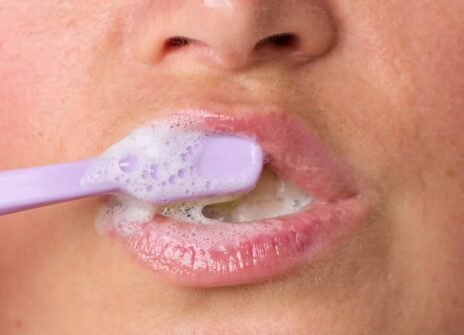
Brushing alone cleans approximately two-thirds of your tooth surfaces. The remaining third — the areas between your teeth and just below the gum line — can only be reached by flossing or using interdental cleaning tools. Without regular flossing, plaque accumulates in these gaps, leading to gum disease, cavities and bad breath.
Flossing is not optional if you want healthy teeth and gums. It is an essential part of daily oral hygiene that prevents problems brushing alone cannot address.
Only around 30% of adults in the UK floss regularly, which means the majority of people are leaving significant plaque deposits untouched every day.
Correct flossing technique matters as much as flossing itself. Done wrong, flossing can miss plaque or irritate your gums. Here is the proper method.
1. Cut approximately 45cm (18 inches) of floss. Wind most of it around the middle finger of one hand, and the rest around the middle finger of the other hand.
2. Hold the floss taut between your thumbs and forefingers, leaving about 2-3cm of floss to work with.
3. Gently slide the floss between two teeth using a back-and-forth motion. Do not snap or force the floss, as this can damage your gums.
4. Curve the floss into a C-shape against one tooth surface. Slide it gently from the gum line to the tip of the tooth.
5. Repeat on the adjacent tooth in the same gap, curving the floss in the opposite direction.
6. Unwind a fresh section of floss as you move to each new gap. Using the same section transfers bacteria between teeth.
7. Do not forget the back of your last teeth — plaque accumulates here too.
| Mistake | Why It Matters | Correction |
|---|---|---|
| Snapping floss down onto gums | Can cut or bruise gum tissue | Use a gentle back-and-forth sliding motion |
| Only moving floss up and down | Misses plaque on the curved tooth surface | Curve into a C-shape and follow the tooth contour |
| Using the same section for every gap | Transfers bacteria between teeth | Unwind fresh floss for each new gap |
| Skipping the back teeth | Plaque builds up in these areas too | Always floss behind your last molars |
| Stopping when gums bleed | Bleeding usually means gums need more cleaning, not less | Continue gently; bleeding typically stops within 1-2 weeks of regular flossing |
Braces make flossing more challenging because the archwire blocks normal access between teeth. However, flossing with braces is especially important because brackets and wires trap more food and plaque.
Remove your Invisalign aligners before flossing. With the aligners out, you can floss normally using standard technique. Replace the aligners after flossing and brushing.
| Feature | String Floss | Water Flosser |
|---|---|---|
| Plaque removal | Excellent with correct technique | Good; particularly effective around braces |
| Ease of use with braces | Difficult; requires threading | Easy; no threading needed |
| Cost | Very low | Higher upfront cost |
| Portability | Highly portable | Less portable (needs water and power) |
| Gum stimulation | Moderate | Good — gentle water pressure massages gums |
| Best for | Most people with good dexterity | Brace wearers, implant patients, those with limited dexterity |
A water flosser is a good supplement but is not a complete replacement for string floss in most cases. It is particularly useful for patients with braces, implants or bridges where threading floss is difficult. learn more
There is no clinical evidence that the order matters. Some dentists recommend flossing first to loosen debris before brushing it away, while others suggest flossing after brushing to remove anything the toothbrush missed. The most important thing is that you floss thoroughly once a day, in whichever order works best for your routine.
If you have not been flossing regularly, your gums may bleed the first few times. This is normal and indicates that your gums are inflamed from plaque build-up. With consistent daily flossing, the bleeding should stop within one to two weeks as your gum health improves.
If bleeding persists beyond two weeks, book an appointment at Pure Smiles so we can check for gum disease. learn more
Our hygienists at Pure Smiles can demonstrate the correct flossing technique during your appointment and recommend the best tools for your teeth. We have two practices in Fulham: 257 New Kings Road, SW6 4RB and 750a Fulham Road, SW6 5SH.
Call 020 7736 6276 to book. learn more
Floss once a day. The time of day does not matter — choose a time that fits your routine and stick to it consistently. Most dentists at Pure Smiles recommend flossing in the evening so you remove the day’s plaque before bed.
Yes. Brushing only cleans about two-thirds of your tooth surfaces. The gaps between your teeth and the area just below the gum line are inaccessible to a toothbrush. Without flossing, plaque in these areas hardens into tartar, which can only be removed professionally.
Waxed floss slides more easily between tight teeth. Unwaxed floss grips tooth surfaces slightly better. Dental tape is wider and may be more comfortable for people with larger gaps. The best floss is whichever type you will use consistently.
No. Bleeding gums are a sign of inflammation, usually caused by plaque build-up. Continue flossing gently and the bleeding should subside within one to two weeks. If it persists, visit Pure Smiles for a gum health assessment.