Scientists are developing treatments that could allow dentists to regrow damaged teeth naturally, potentially replacing traditional fillings within the coming decades. A drug called Tideglusib and new laser therapies have shown promising results in stimulating the body’s own repair mechanisms. Here is what the research shows and what it means for dental care.
Teeth already have a limited natural repair ability. When the dental pulp (the soft tissue inside your tooth) is exposed through trauma or infection, it can regenerate a very thin layer of dentine, the hard tissue that sits beneath your enamel. However, this natural regrowth is not enough to repair the deep cavities caused by tooth decay. That is why dentists currently use fillings to restore damaged teeth.
Traditional fillings made from amalgam or composite resin are effective, but they are not permanent. Over time, fillings can crack, wear down or fall out, requiring replacement. A biological approach to tooth repair could change this entirely.
Tideglusib was originally developed to treat neurological disorders such as Alzheimer’s disease. Researchers at King’s College London discovered that the drug can stimulate stem cells within the dental pulp to produce new dentine, effectively allowing teeth to heal themselves.
Tideglusib works by inhibiting an enzyme called GSK-3 (glycogen synthase kinase 3). When applied directly inside a cavity using a biodegradable collagen sponge, the drug activates the tooth’s own stem cells to generate enough dentine to fill the gap naturally.
| Aspect | Traditional Fillings | Tideglusib Approach |
|---|---|---|
| Material | Amalgam or composite resin | Patient’s own natural dentine |
| Longevity | May need replacement after 5-15 years | Potentially permanent biological repair |
| Process | Drill and fill | Drug applied on biodegradable sponge |
| Current availability | Standard treatment worldwide | Research stage, human safety tests passed |
| Suitable for | Cavities of all sizes | Currently tested for small to medium cavities |
The drug has already passed safety testing in humans for its neurological applications, which could accelerate its pathway to dental use.
Tideglusib is not the only approach being studied. Researchers at the University at Buffalo have tested low-power lasers to regenerate dental tissue. While dentists already use lasers to cut tissue during procedures, the Buffalo team found that shining low-level laser light on the dental pulp can stimulate the production of new dentine.
This approach could potentially be used as an alternative to root canal treatment in some cases. Studies around low-level light therapy have been accumulating for decades, and this research represents a significant step forward in applying the technology to tooth regeneration.
Many scientists believe that regrowing an entire missing tooth will eventually be possible. Research teams in Japan and the United States are investigating ways to trigger the growth of new teeth using gene therapy and biological scaffolds. While this remains further from clinical reality than Tideglusib or laser treatments, the pace of research is accelerating.
It is important to note that whole-tooth regeneration is not expected to be available in the near future. For patients who are currently missing teeth, dental implants, bridges and dentures remain the proven restoration options.
While these technologies are still in development, they highlight an important shift in dentistry towards biological repair rather than mechanical replacement. In the meantime, the best approach is still prevention.
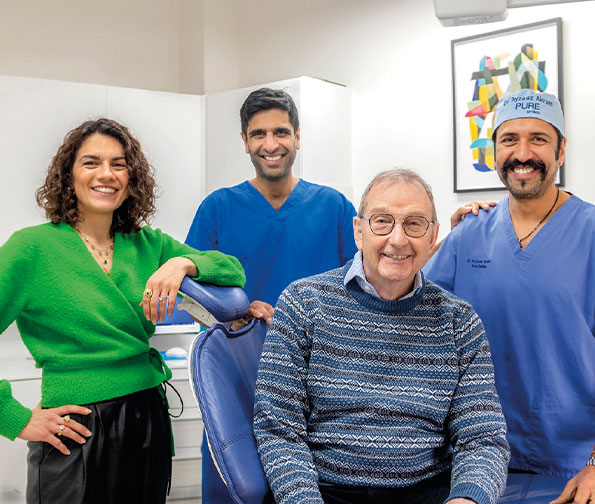
At Pure Smiles in Fulham, Dr Ayzaaz Akram (BDS Liverpool 1995, GDC 70996) and the team provide a full range of preventive and restorative treatments. If you have concerns about cavities, existing fillings or missing teeth, we can assess your situation and recommend the most effective treatment available today.
Tideglusib has passed human safety testing, but further clinical trials specific to dental use are needed. A realistic timeline for routine clinical availability is not yet confirmed, though some researchers estimate it could be within the next decade.
Not immediately. Early applications are likely to focus on small to medium cavities. Larger restorations and situations involving significant structural damage will likely still require traditional approaches for the foreseeable future.
Not with current technology. Tooth regrowth research currently focuses on repairing existing damaged teeth. For missing teeth, dental implants and other restorations remain the standard of care.
No. Untreated cavities continue to grow and can lead to infection, pain and tooth loss. If your dentist recommends a filling, it is important to proceed promptly. Future biological treatments may eventually be used to maintain or enhance restorations.
—
For expert dental care in Fulham, including fillings, restorations and preventive treatment, contact Pure Smiles on 020 7736 6276. Visit us at 257 New Kings Road, SW6 4RB or 750a Fulham Road, SW6 5SH.