Teeth grinding caused by stress is the most common form of bruxism, accounting for approximately 70% of cases according to the NHS. If you wake up with aching teeth, jaw stiffness or morning headaches, there is a strong possibility you are grinding your teeth in your sleep without knowing it. The condition is not dangerous in the short term, but left untreated it can cause significant damage to your teeth, fillings and jaw joints over time.
At Pure Smiles in Fulham, our dentists regularly identify bruxism during routine examinations, often before the patient is aware of the problem. Early detection is important because the damage is cumulative and largely preventable with the right treatment.
Bruxism involves involuntary, repetitive contact between the biting surfaces of your upper and lower teeth. During sleep bruxism, this happens in short clusters throughout the night. The grinding can produce audible sounds, and it is frequently a partner who first notices the problem.
The link between stress and bruxism is well established. When you are under sustained stress or anxiety, your body holds tension in your muscles, particularly in the jaw, neck and shoulders. During sleep, when your conscious control relaxes, this tension can manifest as clenching and grinding.
Stress-related bruxism is not the same as occasional jaw clenching. It is a pattern of repeated grinding that accelerates wear on your teeth over weeks and months. The more stressed you are, the worse the grinding tends to become.
While stress is the leading cause, bruxism can also result from:
| **Cause** | **How It Contributes** |
|---|---|
| Sleep disorders (sleep apnoea, restless leg syndrome) | Disrupt normal sleep patterns, increasing grinding episodes |
| High alcohol consumption | Reduces sleep quality, making grinding more likely |
| Smoking | Stimulant effect increases jaw muscle activity |
| Excessive caffeine | Caffeine lingers in the system and disrupts sleep quality |
| Dental misalignment | Crowded or misaligned teeth create an uneven bite |
| Certain medications | Some antidepressants (SSRIs) are linked to bruxism |
In some cases, bruxism occurs alongside other sleep disorders that require separate attention. If you suffer from sleep apnoea, it is worth discussing bruxism with both your dentist and your GP.
Many people grind their teeth for months or years without realising it. The following symptoms should prompt you to book a dental check-up:
If your partner tells you they can hear you grinding at night, take it seriously. The sound of bruxism is distinctive and usually indicates a pattern significant enough to cause dental damage.
The forces generated during teeth grinding are substantial, often far greater than normal chewing forces. Over time, this leads to:
The damage is cumulative. The sooner bruxism is identified and managed, the less repair work your teeth will need.
The most effective treatment for bruxism is a custom-made occlusal splint worn during sleep. Unlike over-the-counter mouthguards, a custom splint is made from precise impressions of your teeth, ensuring a comfortable and accurate fit.
The splint creates a barrier between your upper and lower teeth, distributing grinding forces evenly and preventing direct tooth-to-tooth contact. Hard acrylic splints are the most durable option, typically lasting several years. Softer guards are an alternative but tend to wear out faster.
At Pure Smiles, we offer custom splints made at both our Fulham practices on learn more New Kings Road (SW6 4RB) and Fulham Road (SW6 5SH). A splint does not cure bruxism, but it protects your teeth while you address the underlying cause.
If your bruxism is partly caused by dental misalignment, correcting your bite can reduce or eliminate the grinding. learn more Invisalign clear aligners are a discreet option for adults who want to straighten their teeth without traditional metal braces.
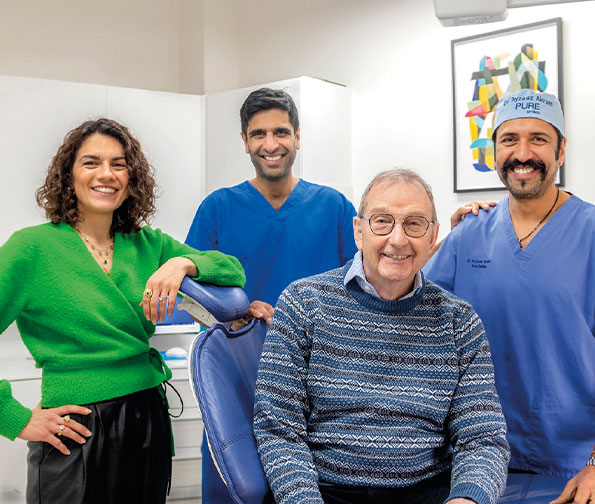
For patients whose grinding is driven primarily by stress and anxiety, Dr Ayzaaz Akram (BDS Liverpool, GDC 70996) offers clinical hypnotherapy. As a qualified clinical hypnotherapist, Dr Akram uses this evidence-based approach to help patients address the subconscious triggers behind their grinding. Hypnotherapy is not a standalone treatment for bruxism, but it is a valuable complementary approach that many patients find effective.
Managing stress is not just good for your mental health. It directly reduces teeth grinding. Practical steps include:
Book a dental appointment if you experience morning jaw pain, notice chips or wear on your teeth, or if a partner reports hearing grinding at night. Your dentist can identify the signs of bruxism during a routine examination and recommend the most appropriate treatment.
At Pure Smiles in Fulham, we take a thorough approach to bruxism, assessing both the dental damage and the likely contributing factors. Call us on 020 7736 6276 or email reception@puresmiles.co.uk to book.
Sometimes. If bruxism is caused by a temporary period of stress, it may resolve when the stress passes. However, if grinding has become a habitual pattern, it is unlikely to stop without intervention. Wearing a splint protects your teeth in the meantime.
Common indicators include morning headaches, jaw pain or stiffness when you wake up, tooth sensitivity, and a partner reporting grinding sounds. Your dentist can also identify wear patterns on your teeth during a routine check-up that are characteristic of bruxism.
Over-the-counter mouthguards provide some protection, but they do not fit as precisely as custom-made splints. A poor fit can be uncomfortable, may not distribute forces evenly, and can even worsen jaw problems in some cases. Custom splints from your dentist are the recommended option.
Yes. Bruxism is common in children, particularly during phases of tooth development. Most children grow out of it, but if the grinding is persistent or causing visible wear on teeth, it is worth mentioning at their next dental appointment.
There is a well-documented association between bruxism and obstructive sleep apnoea. If you grind your teeth and also experience heavy snoring, daytime fatigue or interrupted breathing at night, discuss both conditions with your dentist and GP. Treating the sleep apnoea may also reduce the grinding.