Your teeth do far more than create an attractive smile. They are essential for eating, speaking, and maintaining the structure of your face — and their condition is directly linked to your overall health and life expectancy. At Pure Smiles in Fulham, we see the impact of good and poor dental health every day, and we want our patients to understand just how much their teeth matter to their quality of life.
The most fundamental role of your teeth is breaking down food so that your body can digest and absorb nutrients effectively. This is not a minor function — it is the starting point of your entire digestive process.
When you chew, your teeth crush food into smaller particles and mix it with saliva, which contains enzymes that begin breaking down carbohydrates. If food is not chewed properly — due to missing, damaged, or painful teeth — larger, poorly processed pieces enter the stomach and intestines. This can lead to:
Each type of tooth plays a specific role in this process. Your incisors cut, your canines tear, and your premolars and molars grind food into a consistency that your body can process efficiently. Losing even one or two teeth can compromise this system.
Research consistently shows a connection between maintaining your natural teeth and living longer. A study published in the Journal of the American Geriatrics Society found that people who retained all of their teeth at age 74 had a significantly greater chance of reaching 100 compared to those who had lost teeth.
This is not simply because healthy teeth are a sign of good genes. Tooth loss is often caused by [gum disease]learn more, which is an inflammatory condition. Chronic oral inflammation has been linked to:
| Condition | Connection to Oral Health |
|---|---|
| Heart disease | Oral bacteria can enter the bloodstream and contribute to arterial inflammation |
| Diabetes | Gum disease and diabetes worsen each other in a bidirectional relationship |
| Dementia | Studies suggest chronic periodontitis may increase dementia risk |
| Respiratory infections | Oral bacteria can be aspirated into the lungs |
| Arthritis | Shared inflammatory pathways between periodontitis and rheumatoid arthritis |
| Oral cancer | Poor oral health and chronic irritation increase risk |
Your mouth is connected to the rest of your body through your bloodstream, respiratory system, and nervous system. Keeping your teeth and gums healthy is not just about your mouth — it is a form of whole-body preventive healthcare.
The role teeth play in speech is something most people take for granted until a tooth is lost or damaged. Your teeth, tongue, lips, and palate work together to produce the full range of sounds in the English language.
Specific sounds that depend heavily on your teeth include:
Missing front teeth can cause lisping, whistling, or slurred speech. Even a single lost tooth can alter the way air flows through your mouth, changing how certain words sound. For children, healthy teeth are particularly important for speech development.
Your teeth are embedded in your jawbone, and together they form the structural foundation of the lower half of your face. When teeth are lost, the jawbone in that area begins to deteriorate through a process called bone resorption. Over time, this can lead to:
This is why replacing missing teeth with options such as [dental implants]learn more is about more than cosmetics — it preserves the bone structure that maintains your facial appearance and function.
The impact of dental health on mental wellbeing is well documented but often underestimated. People who are unhappy with their teeth are more likely to:
A healthy, confident smile affects how you present yourself to the world and how others respond to you. Investing in your dental health is an investment in your social confidence and emotional wellbeing.
Maintaining healthy teeth is straightforward, but it requires consistency. The foundations of lifelong dental health are:
Prevention is always simpler and less expensive than treatment. A regular [hygiene appointment]learn more combined with a six-monthly check-up is one of the most cost-effective investments you can make in your health.
Yes. Tooth loss is closely associated with gum disease, which is a chronic inflammatory condition linked to heart disease, diabetes, dementia, and other systemic health problems. Maintaining your natural teeth supports your overall health.
Bacteria from infected gums can enter the bloodstream and attach to fatty deposits in the arteries. This contributes to the formation of blood clots and inflammation, increasing the risk of heart attack and stroke.
It is never too late. Even if you have existing damage or missing teeth, modern dentistry offers a wide range of treatments — from deep cleaning and fillings to implants and [veneers]learn more — that can restore both function and appearance. The most important step is booking a check-up.
Your smile is one of the first things people notice about you. Research shows that people with healthy teeth are perceived as more attractive, more successful, and more trustworthy. Feeling confident about your teeth has a measurable positive impact on your social and professional life.
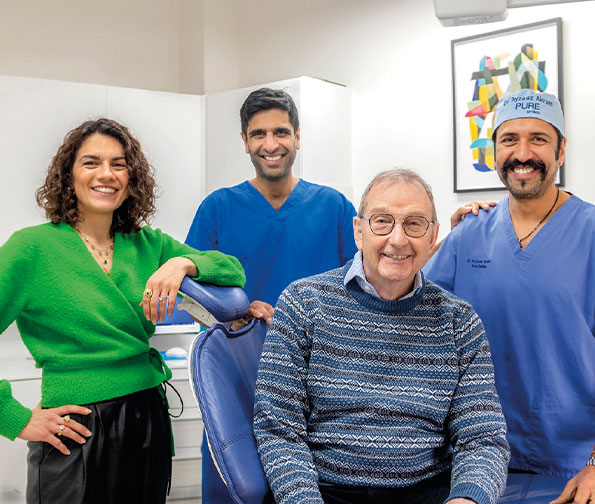
Your teeth are one of your most valuable assets. At Pure Smiles, Dr Ayzaaz Akram (BDS Liverpool 1995, GDC 70996) and the team provide comprehensive dental care that keeps your teeth healthy, functional, and looking their best at every stage of life.
[Book a check-up today]learn more — because happy teeth really do mean a happier life.