Tooth decay is entirely preventable. Understanding what causes cavities and taking simple daily steps to protect your enamel can mean the difference between a lifetime of healthy teeth and repeated cycles of fillings, crowns, and extractions.
Our ancestors rarely suffered from tooth decay. Historical records confirm that the prevalence of cavities increased dramatically alongside the consumption of refined sugars and processed flour. Modern diets are, put simply, bad news for teeth — but modern dental knowledge gives you the tools to fight back.
Tooth decay is not something that happens overnight. It is a gradual process with several stages, and understanding this process empowers you to intervene before a cavity forms.
1. Plaque forms. Bacteria in your mouth combine with food particles and saliva to form a sticky film called plaque on tooth surfaces.
2. Acid attack. When you consume sugar or starchy food, the bacteria in plaque feed on it and produce acid as a byproduct.
3. Demineralisation. The acid dissolves minerals (primarily calcium and phosphate) from the outer enamel layer, weakening it. This is called demineralisation.
4. Remineralisation. Between acid attacks, saliva works to neutralise the acid and redeposit minerals back into the enamel. Fluoride from toothpaste accelerates this repair.
5. Cavity formation. If the balance tips toward demineralisation — because of too-frequent sugar exposure, inadequate cleaning, or insufficient fluoride — the enamel breaks down permanently, forming a cavity.
The critical point: the process of decay starts well before you see a visible hole and well before you feel any toothache. By the time a cavity is visible or painful, the damage is already significant. This is why regular dental check-ups at Pure Smiles are essential — your dentist can detect early demineralisation and intervene before a filling becomes necessary.
| Factor | Promotes Demineralisation (Bad) | Promotes Remineralisation (Good) |
|---|---|---|
| Diet | Frequent sugar/starch intake | Limiting sugar to mealtimes |
| Saliva | Dry mouth (medication, mouth breathing) | Normal saliva flow |
| Fluoride | Low fluoride exposure | Fluoride toothpaste (1350-1500 ppm) |
| Plaque | Thick plaque buildup | Regular brushing and flossing |
| pH | Acidic drinks (juice, fizzy drinks) | Water, milk, cheese |
| Timing | Grazing throughout the day | Defined meals with gaps between |
Sugar is the primary fuel for decay-causing bacteria. Every time you eat or drink something containing sugar, the bacteria in your mouth produce acid that attacks your enamel for approximately 20 minutes. This means:
The frequency of sugar consumption matters as much as, if not more than, the total amount consumed. A single biscuit with lunch causes one brief acid attack. The same biscuit broken into pieces and eaten over two hours causes a prolonged attack that gives your saliva no chance to repair the damage.
Modern processed food is full of hidden sugars. You might be surprised to find added sugar in:
Reading food labels is one of the most effective things you can do for your dental health. Look for the “of which sugars” figure in the nutritional information. Anything above 5g per 100g is considered high sugar.
It is not about never eating sugar — it is about limiting how often you expose your teeth to it. Confine sugary foods and drinks to mealtimes, and choose water between meals.
Brush first thing in the morning and last thing at night with a toothpaste containing 1350-1500 ppm fluoride. Spit out excess toothpaste but do not rinse with water afterward — this allows the fluoride to continue protecting your teeth.
Brushing alone cleans only about 60% of tooth surfaces. Interdental brushes or floss reach the areas between teeth where plaque accumulates and cavities frequently develop. Your hygienist at Pure Smiles can show you the right technique and recommend the correct size of interdental brush for your teeth.
Saliva is your mouth’s natural defence system. It neutralises acid, washes away food particles, and contains minerals that repair early enamel damage. Give it time to work by avoiding constant snacking and grazing throughout the day.
Chewing sugar-free gum after meals stimulates saliva flow and can help accelerate the neutralisation of acid. Look for gum containing xylitol, which has been shown to reduce levels of decay-causing bacteria.
The chewing surfaces of back teeth have deep grooves and pits that trap bacteria and food debris. Fissure sealants — a thin protective coating painted over these surfaces — can reduce the risk of decay by up to 80%. While commonly applied to children’s teeth, sealants can also benefit adults with deep grooves in their molars.
Water is the best drink for your teeth. It contains no sugar, no acid, and in many UK areas contains fluoride. Swapping sugary or acidic drinks for water is one of the simplest and most effective changes you can make.
Your dentist at Pure Smiles can detect the earliest signs of enamel weakness before a cavity forms. At this early stage, the damage can often be reversed with improved oral hygiene, fluoride application, or simple dietary changes — no filling required.
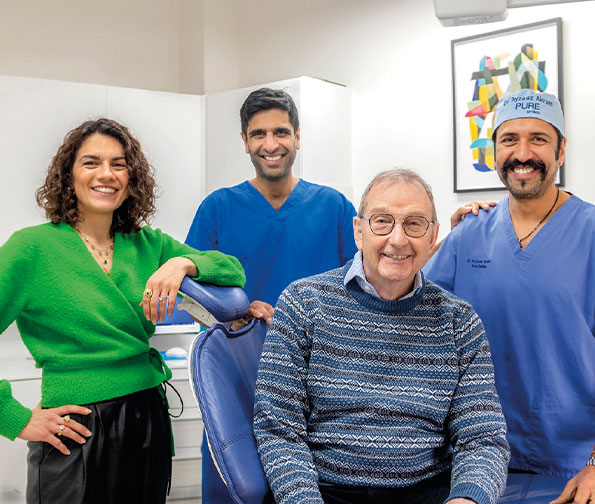
Dr Ayzaaz Akram (BDS Liverpool 1995, GDC 70996) examines teeth for early signs of demineralisation that are invisible to the naked eye but detectable with professional equipment and clinical experience.
If decay has progressed beyond the point where it can be reversed, a filling is necessary to restore the tooth and prevent further damage. At Pure Smiles, we use tooth-coloured composite resin fillings that blend naturally with your teeth, providing both strength and aesthetics.
Modern fillings are a far cry from the large metal amalgam fillings of previous generations. Minimally invasive techniques allow your dentist to preserve as much healthy tooth structure as possible, removing only the decayed material and sealing the tooth with durable, biocompatible material.
However, a filling is always a repair rather than a cure. Filled teeth require ongoing monitoring, and fillings eventually need replacement. Prevention is always preferable to repair.
Regular visits to our dental hygienist complement your home care routine. Professional cleaning removes calculus (tartar) that has hardened onto teeth and cannot be removed by brushing. The hygienist also:
Yes. In the very earliest stages, when demineralisation has begun but a cavity has not yet formed, the process can be reversed through improved oral hygiene, dietary changes, and fluoride application. This is one of the key reasons regular dental check-ups are so valuable.
The recommended interval varies depending on your individual risk factors. Most adults benefit from check-ups every 6 to 12 months. Your dentist will advise on the appropriate frequency for you based on your oral health, diet, and history of decay.
Yes. Factors including the natural composition of your saliva, the depth of grooves in your teeth, dry mouth caused by medication, and the specific bacteria present in your mouth all influence cavity risk. However, even those at higher genetic risk can dramatically reduce their chances of decay through good preventive care.
Yes. Fluoride is the single most effective agent for preventing tooth decay. It strengthens enamel, promotes remineralisation, and inhibits the acid-producing activity of bacteria. Adults should use toothpaste containing 1350-1500 ppm fluoride.
—
For preventive dental care and advice, book an appointment at Pure Smiles on 020 7736 6276. Visit us at 257 New Kings Road, SW6 4RB or 750a Fulham Road, SW6 5SH.