Yes, significantly. The toothbrush and toothpaste you use every day directly affect how effectively you remove plaque, protect your enamel and maintain healthy gums. Choosing the wrong products — or using them incorrectly — can undermine your oral hygiene routine even if you brush twice daily.
A good toothbrush and toothpaste are not the most expensive options on the shelf. They are the ones that match your dental needs: the right bristle softness, the correct fluoride concentration and a technique that cleans without causing damage.
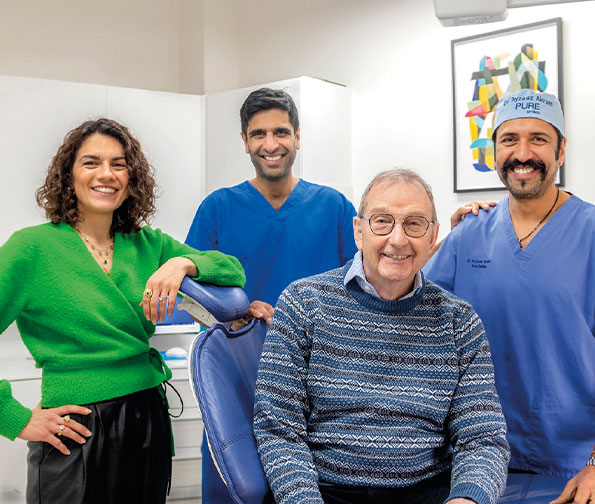
At Pure Smiles in Fulham, our dentists and hygienists regularly advise patients on selecting and using oral care products correctly. Here is what you need to know. learn more
The most important ingredient in any toothpaste is fluoride. Everything else — whitening agents, flavours, charcoal — is secondary.
| Feature | What to Choose | Why |
|---|---|---|
| Fluoride content (adults) | At least 1,350 ppm | Strengthens enamel and prevents tooth decay |
| Fluoride content (children under 6) | 1,000 ppm | Lower concentration suitable for developing teeth |
| Tartar control | Pyrophosphate ingredients | Helps slow the buildup of hardened plaque (tartar) |
| Sensitivity formula | Potassium nitrate or stannous fluoride | Reduces pain from exposed dentine |
| Whitening toothpaste | Optional | May remove surface stains but does not change tooth colour significantly |
For professional teeth whitening that delivers visible, lasting results, consult your dentist rather than relying on whitening toothpaste. At Pure Smiles, we use Enlighten Evolution for predictable whitening outcomes. learn more
Your toothbrush is the tool that does the physical work of removing plaque. Getting this choice right is essential for effective cleaning without causing harm to your teeth and gums.
| Factor | Electric Toothbrush | Manual Toothbrush |
|---|---|---|
| Plaque removal | More effective — oscillating/rotating action removes plaque more thoroughly | Depends entirely on user technique |
| Ease of use | Does most of the work; you just guide it from tooth to tooth | Requires correct up-and-down and circular motions |
| Built-in timer | Most models include a two-minute timer | No timer; users often brush for less than two minutes |
| Pressure sensor | Many models alert you if you press too hard | No feedback on pressure |
| Cost | Higher upfront; replacement heads needed | Very affordable; replace every three months |
| Portability | Bulkier; needs charging | Lightweight and easy to travel with |
Our recommendation at Pure Smiles is an electric toothbrush for most patients. Electric toothbrushes remove plaque more effectively because they maintain consistent speed and motion — factors that are difficult to replicate manually. They are particularly beneficial for patients with limited dexterity, gum disease or a history of brushing too aggressively.
Always choose a soft-bristled toothbrush. Medium and hard bristles can:
A soft brush cleans just as effectively as a hard one when used correctly. If you are using an electric toothbrush, let the brush head do the work — simply guide it gently across each tooth surface.
Even the best toothbrush and toothpaste are only as effective as the technique you use.
| Step | Electric Toothbrush | Manual Toothbrush |
|---|---|---|
| Duration | Two minutes minimum | Two minutes minimum |
| Motion | Hold against each tooth; let the brush do the work | Small circular or gentle up-and-down strokes |
| Pressure | Light — let the bristles make contact without pressing hard | Light — pressing hard damages enamel and gums |
| Coverage | Front, back and chewing surface of every tooth | Front, back and chewing surface of every tooth |
| Gumline | Angle slightly towards the gumline | Angle at 45 degrees to the gumline |
| Tongue | Brush gently or use a tongue scraper | Brush gently or use a tongue scraper |
| After brushing | Spit, do not rinse | Spit, do not rinse |
Replace your manual toothbrush or electric toothbrush head every three months, or sooner if the bristles appear frayed or splayed. Worn bristles clean less effectively and can harbour bacteria.
Every patient’s oral care needs are different. At Pure Smiles in Fulham, our hygienists provide tailored guidance on toothbrush selection, toothpaste choice and brushing technique during your hygiene appointments.
Dr Ayzaaz Akram (BDS Liverpool 1995, GDC 70996) and our team are available at both Fulham locations — 257 New Kings Road, SW6 4RB and 750a Fulham Road, SW6 5SH. Call 020 7736 6276 to book your hygiene appointment. learn more
For most people, yes. Electric toothbrushes remove more plaque because they maintain consistent speed and motion that is difficult to replicate by hand. They also tend to have timers that ensure you brush for the recommended two minutes. That said, a manual toothbrush used correctly with good technique is still effective.
Mouthwash can be a useful addition to your routine, but it should not replace brushing and flossing. Use mouthwash at a separate time to brushing (for example, after lunch) so it does not wash away the fluoride from your toothpaste. Look for a mouthwash containing fluoride for additional protection.
Signs of brushing too hard include receding gums, increased tooth sensitivity, worn enamel (teeth appearing slightly translucent at the edges) and splayed toothbrush bristles within a few weeks of use. Switch to a soft-bristled brush and use gentle pressure. Many electric toothbrushes have pressure sensors that alert you when you are pressing too hard.
Look for a toothpaste containing potassium nitrate or stannous fluoride, both of which help block the tiny channels in dentine that transmit pain signals. Use the sensitive toothpaste consistently for at least two weeks before expecting results. If sensitivity persists, book an appointment at Pure Smiles — persistent sensitivity can indicate an underlying issue that needs treatment.