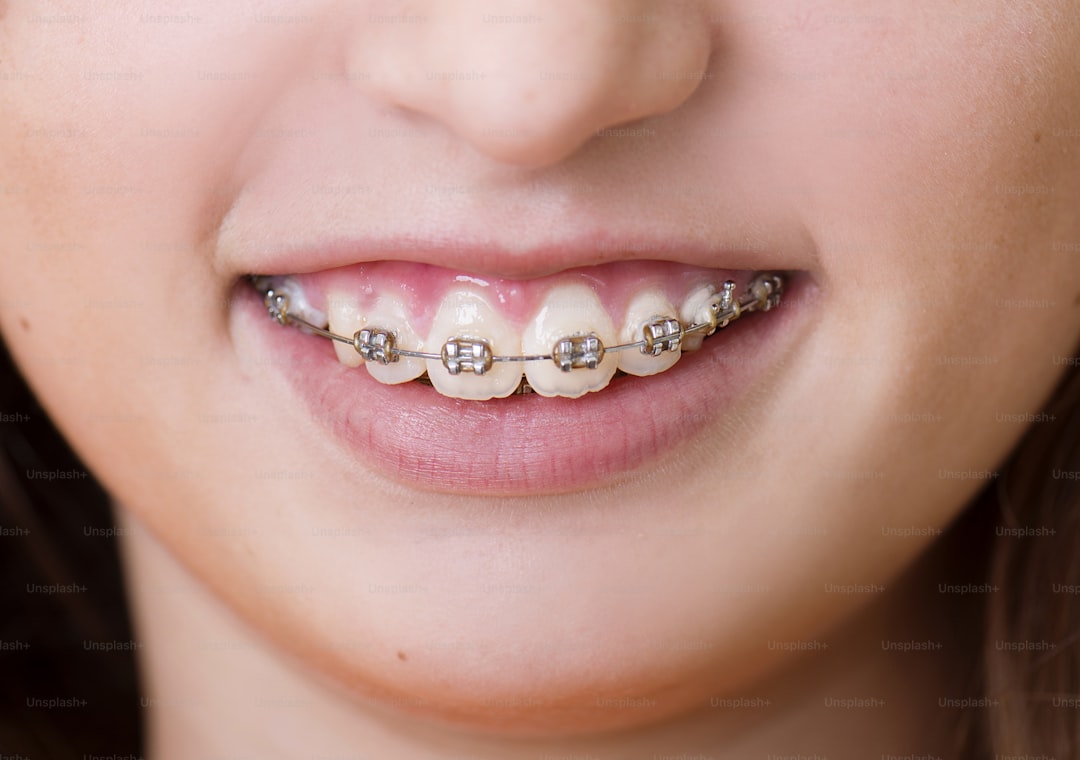
The most effective way to get straight teeth is through orthodontic treatment, either with clear aligners such as Invisalign or with traditional fixed braces. The best option for you depends on the severity of your misalignment, your budget, your lifestyle and how quickly you want to see results.
Straight teeth are not just a cosmetic preference. Properly aligned teeth are easier to clean, less prone to decay and gum disease, and reduce the risk of uneven wear, jaw problems and speech difficulties. At Pure Smiles in Fulham, we offer a range of orthodontic treatments for adults and children, tailored to each patient’s specific needs.
| Treatment | Best For | Visibility | Removable? | Typical Duration | Relative Cost |
|---|---|---|---|---|---|
| **Invisalign** | Mild to moderate misalignment | Nearly invisible | Yes | 6-18 months | Higher |
| **Invisalign Teen** | Adolescents with developing teeth | Nearly invisible | Yes | 6-18 months | Higher |
| **Traditional metal braces** | Moderate to severe misalignment | Visible metal brackets and wires | No | 12-24 months | Lower |
| **Ceramic braces** | Moderate cases where discretion matters | Tooth-coloured brackets, less visible | No | 12-24 months | Moderate |
The general principle is straightforward: the more complex the misalignment, the longer the treatment and the more extensive the approach required.
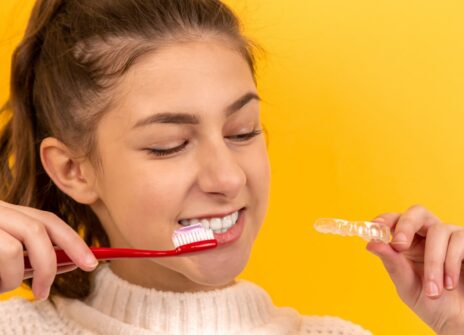
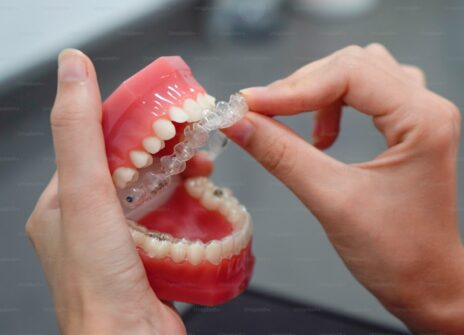
learn more Invisalign uses a series of custom-made, clear plastic trays that gradually move your teeth into the correct position. Each set of aligners is worn for one to two weeks before being replaced with the next set in the series.
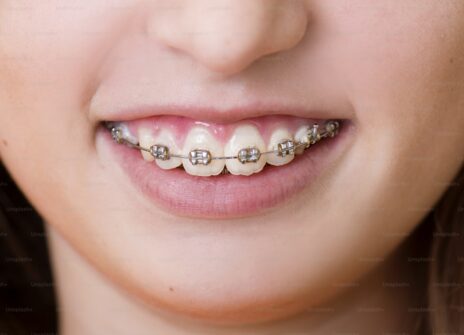
Traditional learn more braces use metal brackets bonded to the front of each tooth, connected by a wire that is periodically tightened to move teeth into position. They have been used for decades and remain the most versatile orthodontic tool available.
Children’s mouths are still growing, which means orthodontic treatment needs to account for ongoing development. At Pure Smiles, we take a conservative approach to children’s orthodontics:
The ideal age for a child’s first orthodontic assessment is around seven, though treatment typically begins between the ages of ten and fourteen depending on development.
All orthodontic treatment requires a retention phase. Without a retainer, teeth will gradually shift back towards their original positions. This applies equally to Invisalign and traditional braces.
Your dentist will fit you with a retainer after your braces are removed or your final aligner set is complete. Retainers may be removable or fixed (bonded behind the teeth), and they are typically worn long-term.
Straightening your teeth is not purely cosmetic. Properly aligned teeth deliver measurable health benefits:
If you are considering teeth straightening, the first step is a consultation to assess your alignment, discuss your goals and recommend the most appropriate treatment option.
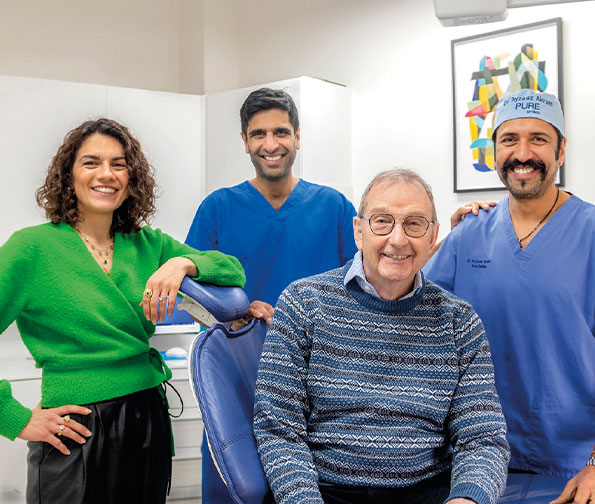
Dr Ayzaaz Akram (BDS University of Liverpool 1995, GDC 70996) and our team provide orthodontic care for adults and children at our two Fulham practices:
To book a consultation, call us on 020 7736 6276 or learn more contact us online.
—
For mild to moderate cases, Invisalign can produce results in as little as six months. More complex cases require longer treatment regardless of the method used. Your dentist will provide a realistic timeline during your consultation based on the specific movements your teeth need.
Neither is universally better. Invisalign offers greater discretion and convenience for mild to moderate cases. Traditional braces are more effective for complex misalignment and severe bite issues. The right choice depends on your individual situation, which your orthodontist will assess during a consultation.
Yes. There is no upper age limit for orthodontic treatment. An increasing number of adults are choosing to straighten their teeth, particularly with discreet options like Invisalign. As long as your teeth and gums are healthy, orthodontic treatment can be effective at any age.
Yes. All orthodontic treatment requires retention to prevent teeth from shifting back. Retainers may be removable or permanently bonded behind your teeth. Your dentist will recommend the best option and advise on how long you need to wear it.
Some discomfort is normal, particularly in the first few days after braces are fitted or a new set of aligners is started. This is caused by the pressure being applied to move your teeth and usually subsides within a few days. Over-the-counter pain relief can help manage any initial soreness.