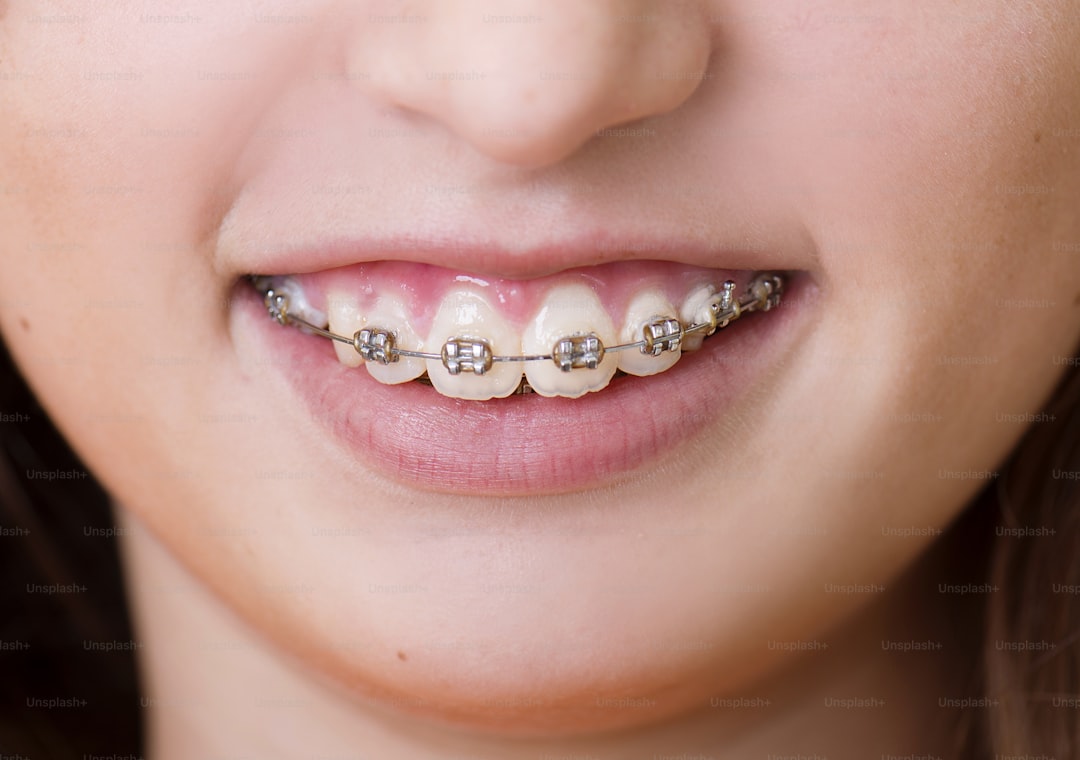
For mild to moderate orthodontic cases in London, Invisalign and fixed braces now cost roughly the same (£3,000–£5,500) and produce comparable results. Invisalign wins on appearance, comfort and convenience. Fixed braces still have an edge for severe rotations, complex bite issues and patients who can’t be trusted to wear removable aligners 22 hours a day.
| Treatment | Mild crowding | Moderate | Complex / full mouth |
|---|---|---|---|
| Invisalign | £1,800–£2,800 | £3,000–£4,000 | £4,200–£5,500 |
| Metal fixed braces | £2,800–£3,500 | £3,200–£4,000 | £3,800–£4,500 |
| Ceramic fixed braces | £3,500–£4,000 | £3,800–£4,800 | £4,500–£5,500 |
| Lingual braces | £5,000–£6,500 | £6,500–£8,000 | £7,500–£9,000 |
The historic premium for Invisalign has narrowed sharply. At Pure Smiles, Comprehensive Invisalign and ceramic braces are now within £500 of each other. For Invisalign specifics, see how much does Invisalign cost in London 2026.
According to a 2023 systematic review in the American Journal of Orthodontics, clear aligners and fixed braces produce statistically similar overall treatment times for moderate complexity cases — around 12–18 months. The differences emerge at the extremes:
For a deeper look at Invisalign timeline tiers, see Invisalign Lite vs Comprehensive.
Invisalign is removable for eating, brushing and special occasions. Fixed braces are not — they’re on 24/7 for the entire treatment, with all the food restrictions that brings.
| Lifestyle factor | Invisalign | Fixed braces |
|---|---|---|
| Eating restrictions | None (removed to eat) | No hard, sticky, chewy foods |
| Brushing & flossing | Normal | Specialist brushes; floss threaders |
| Sports / wind instruments | Easy | Possible but harder |
| Visibility | Nearly invisible | Highly visible (metal) / less visible (ceramic) |
| Discomfort | 2-day ache on new aligner | 3–5 days after each tightening |
| Emergency visits | Rare — replacement aligner | Occasional — broken brackets, poking wires |
The compliance trade-off is the central question. Invisalign needs to be worn 22 hours a day to work — and removed only for meals and cleaning. Patients who forget will get slower results.
Modern Invisalign with SmartTrack material and optimised attachments handles most movements that fixed braces can. According to a 2024 BOS-affiliated meta-analysis, both systems achieve excellent results for:
Fixed braces retain a slight edge in:
For most adult cosmetic cases — the bulk of what we treat at Pure Smiles — Invisalign delivers equivalent or superior outcomes.
| Profile | Best choice | Why |
|---|---|---|
| Adult professional, mild–moderate crowding | Invisalign | Aesthetics, comfort, removable for meetings |
| Teenager, mixed dentition | Invisalign Teen or fixed | Compliance dependent |
| Severe rotations / complex bite | Fixed braces | More control over difficult movements |
| Bride/groom with 6–8 months | Invisalign Lite | Faster, invisible, removable for photos |
| Bruxist (grinder) | Invisalign | Aligners protect against tooth wear during treatment |
| Patient prone to gum disease | Invisalign | Easier cleaning; lower plaque retention |
Book an Invisalign consultation in Fulham — we’ll do an iTero scan and show you exactly how your teeth will move before you commit.
For finishing touches after orthodontics, see composite bonding vs veneers. For full smile transformation costs, see smile makeover cost London 2026.
For mild to moderate cases, yes. For severe rotations and complex bite work, fixed braces retain a small edge.
For mild cases Invisalign is faster (4–10 months vs 12+). For complex cases treatment times are similar.
Yes for most patients. No metal in the cheek, no wire-tightening soreness. New aligners cause a mild ache for 1–2 days.
Yes — aligners are removed to eat. Fixed braces require avoiding hard, sticky and chewy foods throughout treatment.
Depends on compliance. Motivated teens do excellently with Invisalign Teen (with wear-time indicators). Less compliant teens may progress better with fixed braces.