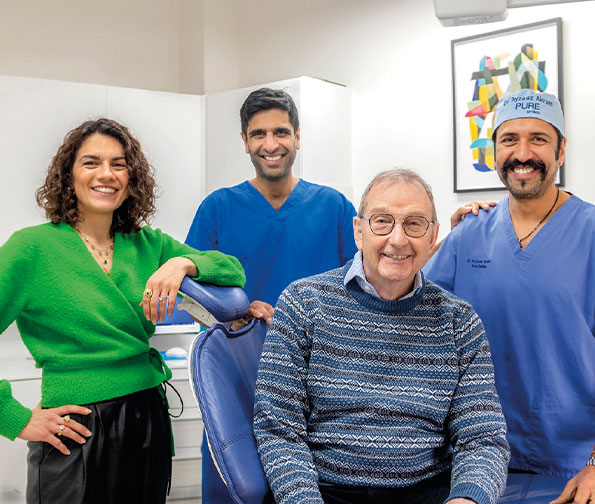
Even if you brush twice a day, certain everyday habits can quietly damage your teeth, wear down enamel and increase your risk of gum disease. The team at Pure Smiles in Fulham sees the effects of these habits regularly — and the good news is that most are easy to correct once you know what to look for.
Tooth damage is not always caused by poor hygiene. It is often the result of well-intentioned habits done at the wrong time, with the wrong tools, or without awareness.
Brushing immediately after a meal feels like good practice, but it can actually harm your enamel. When you eat or drink, the acid levels in your mouth rise temporarily. Brushing during this acidic window pushes the acid across your tooth surfaces, accelerating enamel erosion.
What to do instead: Wait at least 30 minutes after eating before brushing. This gives your saliva time to neutralise the acid naturally. If you want to freshen your mouth sooner, rinse with plain water.
Most people rinse their mouth with water immediately after brushing. This washes away the fluoride from your toothpaste — the very ingredient that protects your teeth from cavities.
What to do instead: Spit out the excess toothpaste but do not rinse. If the taste is too strong, switch to a milder-flavoured toothpaste. If you must rinse, use a minimal amount of water.
Nail biting is not just a cosmetic concern. It is a habit that can chip teeth, cause tooth sensitivity and put sustained pressure on your jaw joint. In more severe cases, regular nail biting contributes to jaw clicking, popping and temporomandibular joint (TMJ) discomfort.
What to do instead: Keep nails trimmed short to reduce temptation. Bitter-tasting nail polish designed to discourage biting is available from most pharmacies.
Aggressive brushing or using a hard-bristled toothbrush wears down enamel and irritates your gums. Over time, this can expose the softer dentine layer beneath your enamel, leading to increased sensitivity and receding gums.
What to do instead: Use a medium-soft or soft-bristled toothbrush. Apply gentle pressure and let the bristles do the work. Electric toothbrushes with pressure sensors can help you avoid brushing too forcefully.
Teeth grinding — medically known as bruxism — is a stress-related habit that usually occurs unconsciously during sleep. Long-term grinding causes stress fractures, worn-down teeth, sensitivity and jaw pain.
| Symptom | What It Indicates |
|---|---|
| Tooth sensitivity without an obvious cause | Enamel is wearing thin from grinding |
| Sore jaw on waking | Jaw muscles are overworked during sleep |
| Morning headaches | Tension from clenching during the night |
| Unexplained chips or flat spots on teeth | Repeated grinding pressure has damaged tooth surfaces |
Pure Smiles offers custom-made mouthguards to protect your teeth from grinding damage during sleep. If you suspect you grind your teeth, book a check-up so we can assess the wear and recommend treatment. learn more
Smoking is not just a staining issue. It is a major risk factor for gum disease, tooth loss and oral cancer. Nicotine restricts blood flow to the gums, slowing healing and making infections harder to fight.
Pure Smiles offers smoking cessation support for patients who want to quit. If you continue to smoke, it is especially important to visit the dentist and hygienist more frequently so your teeth and gums can be monitored and protected. learn more
The Pure Smiles team is here to help you identify and address habits that may be affecting your dental health. We are based at two Fulham locations: 257 New Kings Road, SW6 4RB and 750a Fulham Road, SW6 5SH.
Call 020 7736 6276 to book an appointment with one of our dentists. learn more
Wait at least 30 minutes after eating before brushing your teeth. This allows saliva to neutralise the acids produced during eating. Brushing too soon can spread acid across your enamel and cause erosion over time.
Common signs of night-time teeth grinding include waking with a sore jaw, morning headaches, tooth sensitivity and unexplained chips or flat spots on your teeth. Your dentist at Pure Smiles Fulham can identify grinding wear during a routine examination.
Yes. Regular nail biting can chip or crack teeth, increase sensitivity and put pressure on the jaw joint. Over time, it can contribute to TMJ problems including jaw clicking and pain.
Dentists at Pure Smiles recommend a medium-soft or soft-bristled toothbrush. Hard bristles can damage enamel and irritate gums. Electric toothbrushes with pressure sensors are a good option if you tend to brush too hard.