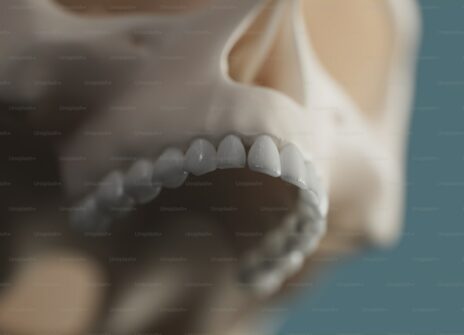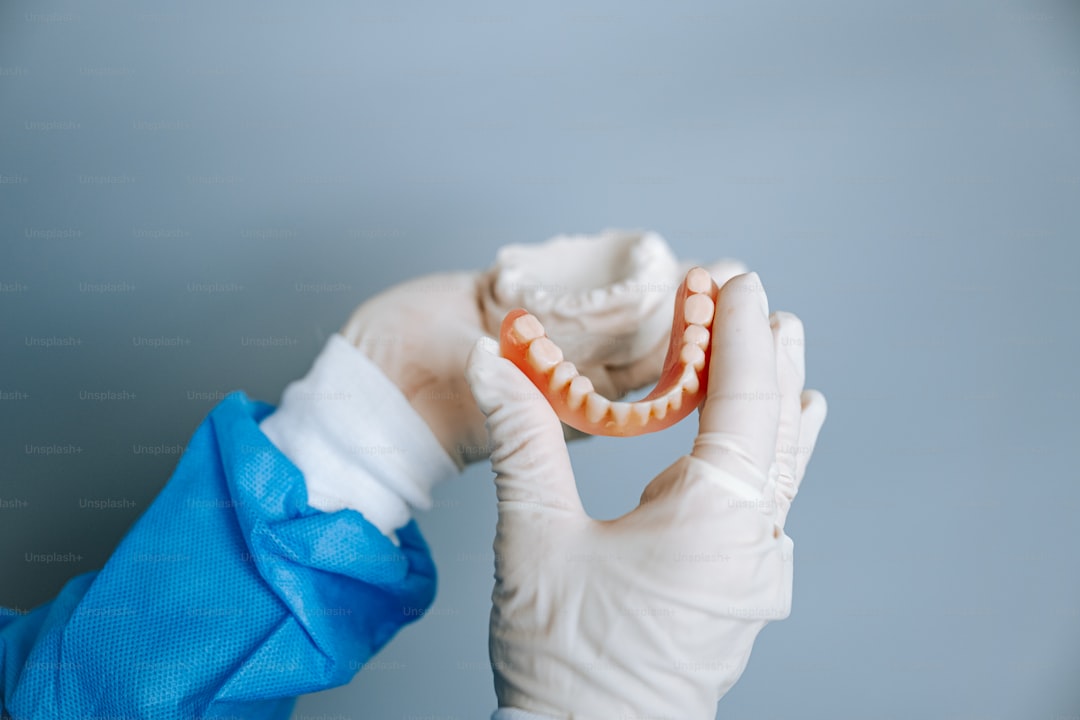
A single tooth dental implant takes 4–6 months from consultation to final crown in most cases. Surgery itself is around 60–90 minutes under local anaesthetic. Recovery is faster than most patients expect — soft tissue heals in 7–10 days, and the longer wait is biological integration of the implant into bone.
Your first visit involves a clinical examination, photographs, periodontal assessment and a CBCT (cone beam CT) scan. The CBCT is a low-dose 3D X-ray that shows bone height, width and proximity to vital structures like the sinus and inferior alveolar nerve.
The CBCT is essential planning for implant placement — the Association of Dental Implantology lists 3D imaging as a baseline standard for any implant case. A traditional 2D panoramic X-ray is not sufficient because it can’t show bone width or angle.
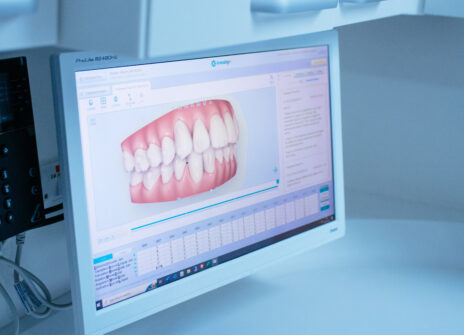
After the scan, your implant surgeon plans the case digitally — implant position, length, angle and the crown that will sit on top. This 3D plan converts into a printed surgical guide for accurate placement on the day.
The surgery itself is straightforward and shorter than most patients expect — usually 60–90 minutes for a single implant. Sequence:
If the tooth is being extracted on the same day, the implant often goes into the fresh socket (an “immediate” implant). According to a 2024 review in the British Dental Journal, immediate implants in suitable sites have survival rates statistically indistinguishable from delayed protocols.
You go home the same day. Sedation is available for anxious patients — see our dental anxiety guide for context on how Pure Smiles handles nervous patients.
This is the longest phase but also the easiest for the patient — you’re not doing anything, the bone is doing the work.
Osseointegration is the biological process where bone cells grow onto and into the microscopic surface texture of the titanium implant. It is not healing in the usual sense — there’s no pain, no swelling, just steady integration over 3–4 months.
What you’ll notice:
Healthier patients integrate faster. Smoking, diabetes and bisphosphonate medications slow the process.
Once your surgeon confirms integration (often with a quick Osstell ISQ stability reading), the next step is fitting the abutment — the connector that sits between the implant and the crown.
| Abutment type | Typical cost | Best for |
|---|---|---|
| Stock titanium | Included in fee | Back teeth, function-led cases |
| Custom milled titanium | £200–£400 extra | Optimised emergence profile |
| Custom zirconia | £300–£600 extra | Front teeth where gum is thin |
A digital scan or conventional impression captures the abutment shape so the lab can fabricate your crown. Most Pure Smiles cases now use a 3Shape intraoral scanner — no impression putty.
Two weeks after the impression, your final porcelain or e.max crown returns from the lab. The dentist tries it in, checks contact points and bite, then either screw-retains or cement-retains it.
According to the Royal College of Surgeons of England, screw-retained crowns are preferred where possible — they’re retrievable for future maintenance. Cement-retained crowns look slightly more aesthetic but trap excess cement, a known cause of peri-implantitis.
For cost expectations, see how much do dental implants cost in London 2026. For multi-tooth cases, read our All-on-4 guide.
| Time after surgery | What’s happening | What you should do |
|---|---|---|
| Hours 0–6 | Anaesthetic wears off; light bleeding | Cold compress, soft food, no rinsing |
| Days 1–3 | Peak swelling and tenderness | Ibuprofen as needed; keep mouth clean |
| Days 4–10 | Tissue healing | Resume gentle brushing; warm salt rinses |
| Weeks 2–6 | Soft tissue fully closed | Soft–normal diet; avoid biting hard on implant |
| Months 2–4 | Osseointegration | Normal life; periodic reviews |
Book your Pure Smiles implant consultation in Fulham — CBCT scan included, written quote provided same day.
4–6 months for a standard case from consultation to final crown. Immediate implants placed at extraction can shorten this to 3–4 months.
No — placement is done under local anaesthetic, the same as for a filling. Post-op discomfort is usually mild and managed with ibuprofen for 1–2 days.
Soft tissue heals within 7–10 days. The implant integrates with bone over 3–4 months, but you’re not in active recovery — this is biological healing.
Soft diet for 7–10 days, then gradually normal foods avoiding the implant site for 6 weeks. Full normal chewing resumes after the final crown is fitted.
Failure occurs in 2–5% of cases. The implant is removed, the site heals for 2–3 months, then a new implant is placed — usually at no extra cost under Pure Smiles’ integration guarantee.