Gum disease is a bacterial infection of the tissues that hold your teeth in place. It is the leading cause of tooth loss in UK adults and affects roughly half the population to some degree. Left untreated, gum disease does not resolve on its own — it progresses from mild inflammation (gingivitis) to serious tissue and bone destruction (periodontitis).
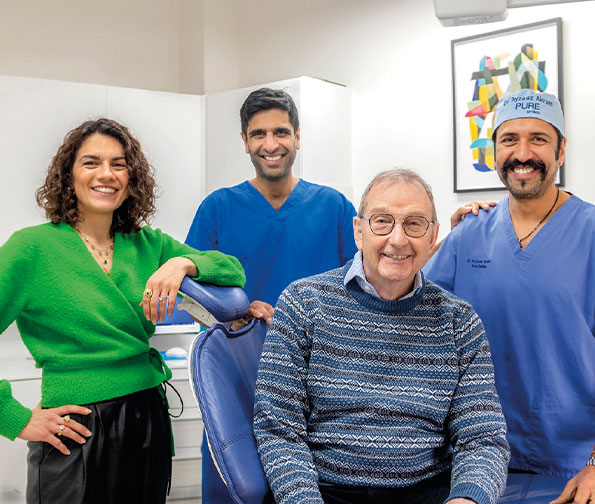
At Pure Smiles in Fulham, Dr Ayzaaz Akram and our dental team see patients at every stage of gum disease. The good news is that early-stage gum disease is entirely reversible with the right care, and even advanced cases can be managed effectively with professional gum disease treatment in Fulham learn more.
Gum disease is caused primarily by excessive plaque build-up along and below the gum line. Plaque is a sticky film of bacteria that forms on teeth daily. When it is not removed through brushing and flossing, it hardens into tarite (calculus), which can only be removed by a dental professional. The bacteria in plaque and tartar produce toxins that irritate the gums, triggering an inflammatory response that gradually breaks down the supporting structures of the teeth.
While plaque is the direct cause, several factors raise your risk of developing gum disease:
Gum disease is often called a “silent” condition because it can progress without causing significant pain in its early stages. Knowing what to look for is essential. If you notice any of the symptoms below, we recommend booking a check-up at our Fulham practice learn more promptly.
| Sign or Symptom | Early Stage (Gingivitis) | Advanced Stage (Periodontitis) |
|---|---|---|
| Gum colour | Red or darker pink along the gum line | Deep red, purple or dusky appearance |
| Bleeding | Gums bleed when brushing or flossing | Gums bleed spontaneously or with light touch |
| Swelling | Mild puffiness around the gums | Pronounced swelling, gums may feel tender |
| Bad breath | Occasional bad breath or taste | Persistent bad breath (halitosis) that does not improve |
| Gum recession | Minimal or none | Gums pull away from teeth, teeth look longer |
| Tooth mobility | Teeth are stable | Teeth feel loose or shift position |
| Pain when biting | None or very mild | Discomfort or pain when chewing |
| Pockets | Shallow gum pockets (1-3mm) | Deep pockets (4mm+) where bacteria collect |
| Bone loss | No bone loss visible on X-ray | Visible bone deterioration on X-ray |
Key distinction: Gingivitis is inflammation of the gums only and is fully reversible. Periodontitis involves irreversible damage to the bone and connective tissue that support the teeth. This is why early detection through regular dental visits is so important.
Treatment depends entirely on the stage and severity of your gum disease. At our practices on New Kings Road and Fulham Road in SW6, we take a phased approach.
For gingivitis, a thorough professional cleaning is usually sufficient. Our hygienists remove plaque and tartar from above and below the gum line, then polish the tooth surfaces to make it harder for bacteria to re-attach. Most patients in South West London need this every six months, though we may recommend more frequent visits if you are at higher risk.
For moderate periodontitis, we carry out root planing — a deeper clean performed under local anaesthetic. This involves smoothing the root surfaces of the teeth to remove embedded bacteria and encourage the gums to reattach. This is typically done over two to four appointments. learn more
Periodontitis is not curable but it is manageable. After active treatment, we place patients on a tailored maintenance programme with more frequent hygiene appointments — typically every three months. Dr Akram, who has been practising since qualifying from the University of Liverpool in 1995, takes a conservative, preventive-first approach to all gum disease treatment at our Fulham clinic.
Prevention is straightforward, but it requires consistency. Here is what our Fulham dental team recommends to every patient.
Brush twice a day for two minutes using a fluoride toothpaste. An electric toothbrush with a pressure sensor is more effective than a manual brush at removing plaque, particularly along the gum line. Replace the brush head every three months.
Brushing alone only cleans about 60% of the tooth surface. You must clean between your teeth daily using floss, interdental brushes or a water flosser. Interdental brushes are generally the most effective option for most adults — ask our hygienist which size is right for your gaps. learn more
An antibacterial mouthwash can reduce plaque bacteria, but it is not a substitute for brushing and flossing. Use it at a different time to brushing (such as after lunch) so you do not rinse away the fluoride from your toothpaste.
Sugar feeds the bacteria that cause gum disease. Reducing sugary snacks and acidic drinks helps significantly. If you smoke, stopping is the single most impactful thing you can do for your gum health — smokers are up to six times more likely to develop periodontitis than non-smokers.
Visit your dentist every six to twelve months. Professional examinations catch gum disease early, often before you notice any symptoms yourself. At Pure Smiles, our routine check-ups include a full periodontal assessment with pocket depth measurements. learn more
Do not wait for pain. If you experience any of the following, book an appointment at our Fulham practice:
Early intervention makes a significant difference. Gingivitis can be reversed in as little as two to three weeks with professional cleaning and improved home care. Periodontitis cannot be reversed, but prompt treatment prevents further damage and tooth loss.
You can book a gum health assessment at either of our Fulham locations — 257 New Kings Road, SW6 4RB or 750a Fulham Road, SW6 5SH — by calling 020 7736 6276 or using our online booking form learn more.
Gingivitis, the early stage of gum disease, is fully reversible with professional cleaning and consistent oral hygiene at home. Periodontitis, the advanced stage, is not reversible — the bone loss it causes is permanent. However, periodontitis can be effectively managed with ongoing professional treatment to prevent further deterioration and tooth loss.
The cost depends on the severity. A standard hygiene appointment at Pure Smiles starts from a routine cleaning fee and is often the only treatment needed for gingivitis. Deep cleaning (root planing) for periodontitis involves additional appointments and is priced per quadrant. We provide a full treatment plan with costs before starting any work. Contact us on 020 7736 6276 for current pricing.
Yes. Research has established links between periodontitis and several systemic conditions, including cardiovascular disease, type 2 diabetes complications, respiratory infections and adverse pregnancy outcomes. The chronic inflammation and bacteria associated with advanced gum disease can enter the bloodstream and affect other parts of the body.
If you have been diagnosed with periodontitis, we typically recommend hygiene appointments every three months rather than the standard six-monthly interval. This more frequent schedule allows us to monitor pocket depths, remove bacterial build-up before it causes further damage, and adjust your treatment plan as needed.
A general dentist can diagnose and treat most cases of gum disease, including deep cleaning procedures. A periodontist is a specialist who has completed additional postgraduate training specifically in the treatment of gum disease and the placement of dental implants. At Pure Smiles, Dr Akram manages the majority of periodontal cases in-house and refers to a specialist periodontist for complex surgical cases when necessary.