The way we brush our teeth has not changed dramatically since the modern toothbrush was invented in 1938. Electric toothbrushes improved efficiency, but the basic principle — moving bristles across tooth surfaces — remains the same. That is likely to change significantly over the coming decades. From hands-free mouthguard brushes to nanoparticle toothpaste that fights plaque for 24 hours, the future of dental hygiene is set to look very different from today.
Here is a look at some of the most exciting innovations in oral care technology and what brushing might look like by 2050.
Bluetooth-connected toothbrushes are already available, and the technology is advancing rapidly. Devices like the Kolibree Ara use built-in sensors to track the movement of the brush around your mouth in real time. Every brushing session is recorded and the data is sent to your smartphone.
This type of smart toothbrush allows you to:
By 2050, it is likely that AI-driven toothbrushes will automatically adjust their cleaning action based on your oral health data, providing a fully personalised brushing experience every time.
One of the most radical innovations is the mouthguard-style toothbrush that cleans all of your teeth at the same time. Products like the Amabrush pioneered this concept, claiming to clean an entire mouth in as little as 10 seconds.
The device works by fitting over your teeth like a gum shield. Soft bristles line the interior, and toothpaste is delivered via a capsule attached to the front. When activated, the bristles vibrate simultaneously across all tooth surfaces.
| Feature | Traditional Brushing | Mouthguard Brushing |
|---|---|---|
| Time required | 2 minutes | 10-30 seconds |
| Coverage | Sequential (one area at a time) | Simultaneous (all teeth at once) |
| Technique dependent | Yes — poor technique reduces effectiveness | No — automated and consistent |
| Hands-free | No | Yes |
While early versions of this technology received mixed reviews, the concept is sound and is likely to be refined significantly over the next two decades.
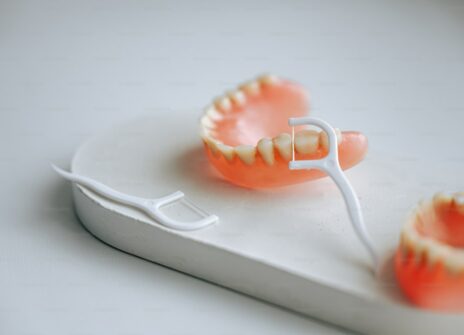
For people with sensitive teeth and gums, the prospect of bristle-free cleaning is particularly appealing. Air-floss technology uses targeted bursts of air and water (or mouthwash) to blast plaque and debris from between teeth and along the gumline.
Studies have shown that air-floss devices can remove up to 99% more plaque than a manual toothbrush in hard-to-reach interproximal spaces. This is not a replacement for surface brushing, but it represents a significant step forward for interdental cleaning — an area where most people’s [oral hygiene routines]learn more fall short.
The T2T (Tongue to Teeth) brush is a concept device that mounts on your tongue. You swirl your tongue around your mouth to brush your teeth, keeping your hands completely free. While it sounds unusual, the idea targets people who struggle with manual dexterity — including elderly patients and those with disabilities.
Hands-free brushing could also appeal to anyone looking to multitask during their morning routine. The technology is still in early development, but it highlights how fundamentally different tooth-cleaning methods may become.
Perhaps the most transformative change will not come from the toothbrush at all, but from the toothpaste. Researchers are developing nanoparticles that bind to the surface of teeth and slowly release antimicrobial compounds throughout the day.
This slow-release mechanism could:
If this technology reaches mainstream use, the traditional twice-daily brushing routine could evolve into something far less time-intensive while delivering superior results.
While these innovations are exciting, the fundamentals of good oral hygiene remain unchanged in 2025. Until these technologies become widely available and clinically proven, the best approach is still:
At Pure Smiles in Fulham, we stay up to date with the latest developments in dental technology and incorporate evidence-based innovations as they become available. Our priority is always providing the best possible care for our patients today, while keeping one eye on what the future holds.
For most people, a good quality electric toothbrush with a two-minute timer is sufficient. Smart toothbrushes with tracking features can be helpful if you want detailed insight into your habits, but they are not essential for good oral health.
It is possible in the long term, but the technology needs further clinical validation. Current models show promise but have not yet matched the proven effectiveness of a well-used electric toothbrush.
Some early versions are in research and limited trials, but mainstream nanoparticle toothpaste is not yet widely available. Clinical testing and regulatory approval are still in progress.
Whether you are brushing with a manual toothbrush or the latest smart device, regular professional care is essential. Book a check-up with our team to ensure your oral health is on track.
[Book an appointment online]learn more or call us today.