If your child has toothache, the first step is to look inside their mouth for visible signs of damage or swelling, offer age-appropriate pain relief and book a dental appointment as soon as possible. Toothache in children is not something to wait out. It usually indicates an underlying issue that needs professional assessment.
Children often cannot describe dental pain accurately. They may not tell you their tooth hurts. Instead, they might refuse food, become irritable, hold their cheek or develop a low-grade fever. Recognising these signs early and acting quickly prevents a manageable problem from becoming a more serious one.
Young children especially may not understand what they are feeling or may not have the words to describe it. The following signs can indicate dental pain:
| Sign | What It May Suggest |
|---|---|
| **Refusing to eat or chewing on one side** | Pain triggered by pressure or temperature on a specific tooth |
| **Holding or rubbing their cheek or jaw** | Localised pain in that area of the mouth |
| **Irritability or crying, especially at night** | Toothache often worsens when lying down |
| **Low-grade fever or general malaise** | Possible infection in a tooth or gum |
| **Visible swelling on the face or gum** | An abscess or significant inflammation |
| **Red, swollen or bleeding gums** | Gum infection or eruption pain in younger children |
If you look inside your child’s mouth, check for chipped or broken teeth, dark spots on the tooth surface, red or puffy gums and any swelling. However, many dental problems are not visible to the untrained eye, so a dental examination is always the most reliable next step.
While you wait for your dental appointment, there are steps you can take to keep your child comfortable:
Pain relief. Give age-appropriate over-the-counter pain relief such as children’s paracetamol or ibuprofen, following the dosage instructions on the packaging. Do not apply aspirin directly to the gums, as this can cause tissue damage.
Cold compress. A cold flannel or wrapped ice pack held gently against the outside of the cheek can help reduce swelling and numb the area temporarily.
Soft foods. Offer soft, lukewarm foods and avoid anything very hot, very cold or sugary, all of which can aggravate the pain.
Gentle cleaning. If your child can tolerate it, help them brush gently around the affected area to remove any trapped food. Do not force this if it causes significant distress.
A common suggestion is to rinse with warm salt water. This is not recommended for young children who may swallow the solution. For older children who can reliably spit, a mild salt water rinse can help reduce bacteria around the affected area.
When you bring your child to Pure Smiles, the appointment begins with a gentle examination to determine the cause of the pain. Our team is experienced in treating children and understands that a dental visit can be confusing or frightening for young patients.
Our approach includes:
The cause of the toothache determines the treatment. Common causes and their treatments include:
| Cause | Typical Treatment |
|---|---|
| **Tooth decay or cavity** | Filling, or pulpotomy treatment for children pulpotomy if the decay has reached the pulp |
| **Chipped or cracked tooth** | Bonding, crown or extraction depending on severity |
| **Gum infection** | Cleaning, drainage if needed, antibiotics in some cases |
| **Eruption pain (new teeth coming through)** | Reassurance, pain relief, monitoring |
| **Misalignment causing pressure** | Referral to our orthodontics team for braces treatment braces assessment |
Every treatment plan is discussed with you as the parent before any work begins. You will understand what is required, why it is recommended and what to expect during recovery.
Prevention is always preferable to treatment. The most effective ways to reduce the risk of your child experiencing toothache are:
Brush twice daily. If your child is too young to brush effectively on their own, do it for them. Use a fluoride toothpaste in an age-appropriate amount (a smear for under-threes, a pea-sized amount for ages three to six).
Limit sugar. Sugary food and drinks are the primary fuel for the bacteria that cause decay. Check labels on snacks, fruit juices and yoghurts, as many contain more sugar than parents realise.
Regular dental visits. Children should visit the dentist every six to nine months, starting from when their first tooth appears or by their first birthday. These routine appointments allow problems to be caught early, often before any pain occurs.
Lead by example. Children who see their parents brushing, flossing and attending dental appointments are more likely to adopt the same habits.
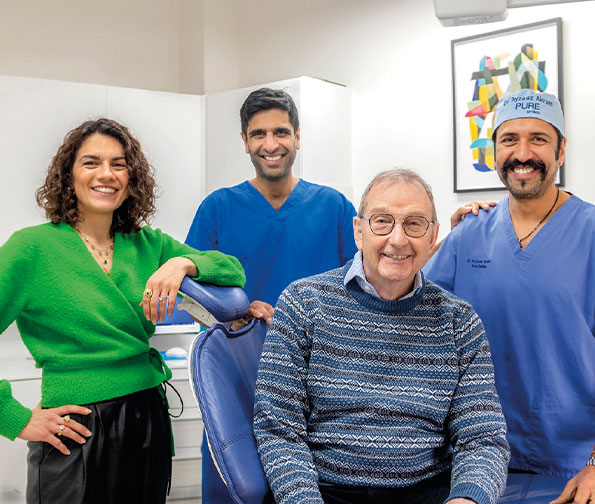
Pure Smiles has been caring for families in Fulham since 2009. Dr Ayzaaz Akram (BDS University of Liverpool 1995, GDC 70996) leads our team, and we provide a full range of learn more children’s dental services, from routine check-ups to emergency appointments.
Visit us at either of our two Fulham locations:
To book an appointment, call us on 020 7736 6276 or learn more contact us online.
—
The most common causes of toothache in children are tooth decay, cavities, chipped or cracked teeth, gum infections and the natural process of new teeth erupting. In some cases, food trapped between teeth can cause temporary pain. A dental examination is the best way to identify the specific cause.
You should book a dental appointment as soon as your child reports or shows signs of toothache. Dental pain in children typically indicates a problem that will not resolve on its own and can worsen if left untreated. If there is facial swelling, fever or severe pain, contact your dentist urgently.
Yes. Children’s paracetamol or ibuprofen can be given following the dosage instructions for their age and weight. Do not apply aspirin directly to the gums. Pain relief manages symptoms while you arrange a dental appointment, but it does not treat the underlying cause.
The NHS recommends that children visit the dentist when their first milk teeth appear, or by their first birthday at the latest. Early visits establish a routine, allow the dentist to monitor development and help your child become comfortable in the dental environment before any treatment is needed.
Our team uses a slow dentistry approach, taking time to explain each step in language children can understand. We adapt the environment to reduce anxiety and make the visit as positive and educational as possible. Dr Akram is also a qualified clinical hypnotherapist, offering additional techniques for managing dental anxiety in both children and adults.