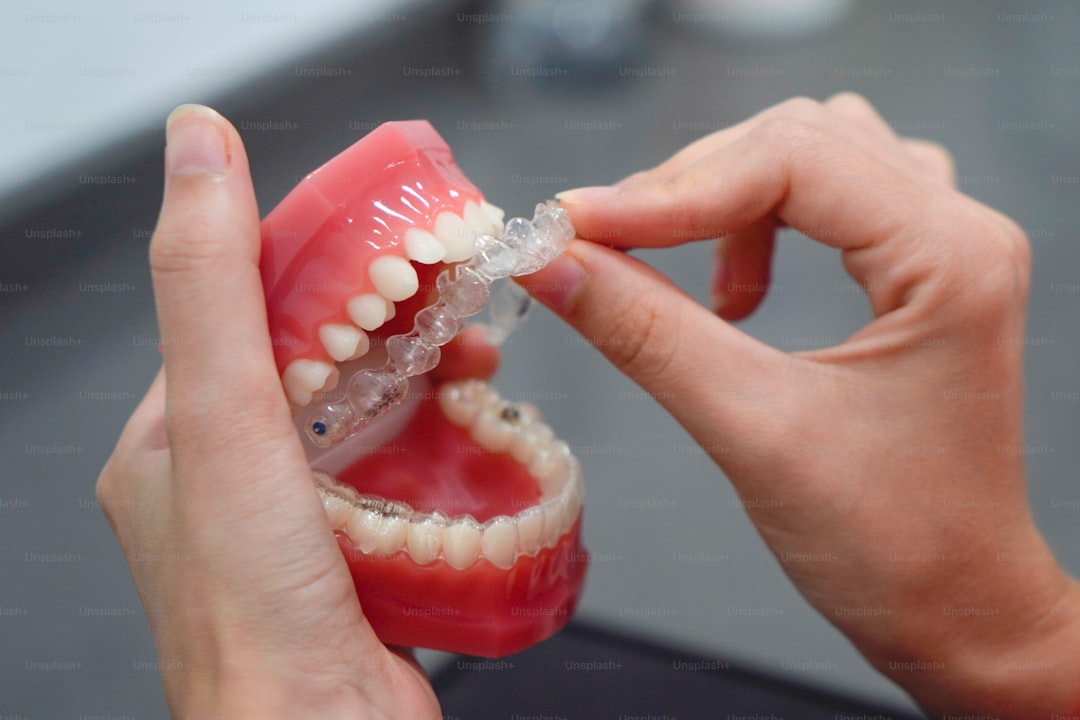
Invisalign and traditional braces both straighten teeth, but they do it in fundamentally different ways and suit different situations. Invisalign uses removable clear plastic aligners and works best for mild to moderate misalignment. Traditional braces use fixed metal brackets and wires and can treat the full range of orthodontic problems, including severe cases that Invisalign cannot address.
The right choice depends on the complexity of your case, your lifestyle, your budget and how much the appearance of your braces matters to you. At Pure Smiles in Fulham, we offer both options and recommend the one that will deliver the best result for your specific situation.
| Feature | Invisalign | Traditional Braces |
|---|---|---|
| **Appearance** | Nearly invisible clear aligners | Visible metal brackets and wires |
| **Removable** | Yes, for eating, brushing and flossing | No, fixed in place for the duration of treatment |
| **Comfort** | Smooth plastic, no sharp edges | Metal brackets can irritate cheeks and lips initially |
| **Dietary restrictions** | None, aligners are removed for eating | Yes, hard, sticky and crunchy foods must be avoided |
| **Oral hygiene** | Normal brushing and flossing with aligners removed | More difficult, requires cleaning around brackets and wires |
| **Effectiveness** | Mild to moderate misalignment, gaps, minor bite issues | All levels of complexity, including severe crowding and bite problems |
| **Treatment time** | Typically 6-18 months | Typically 12-24 months |
| **Compliance required** | High, must wear 20-22 hours daily | None, braces are permanently fixed |
| **Check-up frequency** | Every 6-8 weeks | Every 4-6 weeks |
| **Retainer needed after** | Yes | Yes |
| **Relative cost** | Higher | Lower |
Neither option is universally better. Each has clear advantages and limitations that make it more or less suitable depending on the individual patient.
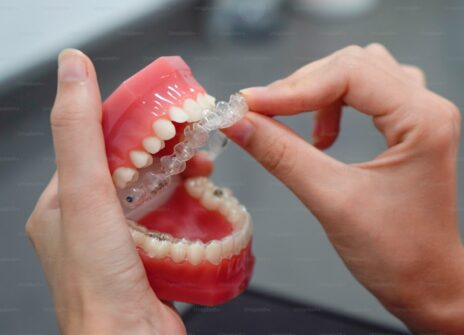
learn more Invisalign treatment begins with digital scanning of your teeth. The scans are used to create a 3D treatment plan that maps out exactly how your teeth will move at each stage. A series of custom-made clear aligners is then produced, each designed to make small, incremental adjustments.
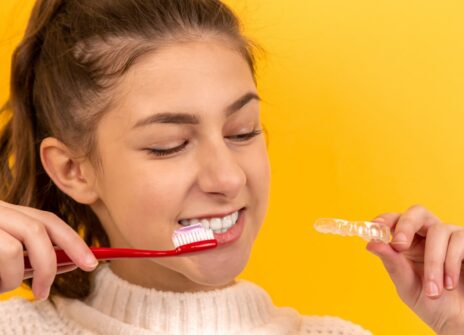
You wear each set of aligners for one to two weeks before switching to the next set. The aligners must be worn for 20 to 22 hours per day to be effective, removed only for eating, drinking anything other than water, and cleaning your teeth.
Discretion. The aligners are virtually invisible when worn. Most people will not notice you are undergoing orthodontic treatment, which is a significant factor for adults in professional or social settings.
Convenience. Removing the aligners for meals means no dietary restrictions. Removing them for brushing and flossing means no change to your oral hygiene routine. This is a genuine practical advantage over fixed braces.
Predictability. Digital treatment planning allows you to see projected results before treatment begins. Each stage is mapped in advance, so both you and your dentist know what to expect.
Complex cases. Invisalign is not designed to correct severe crowding, significant rotations, complex bite problems such as deep overbites or underbites, or cases requiring large vertical tooth movements. For these situations, traditional braces are more effective.
Patient discipline. The treatment only works if you wear the aligners consistently. If you regularly forget to put them back in after eating, or leave them out for extended periods, your teeth will not move as planned and treatment will take longer or produce incomplete results.
Attachments. Many Invisalign cases require small tooth-coloured composite buttons bonded to the teeth to help the aligners grip. While these are less visible than metal brackets, they are an additional element that some patients do not expect.
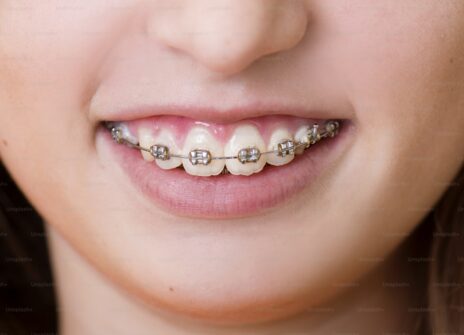
Traditional learn more braces consist of metal brackets bonded to the front of each tooth, connected by a metal archwire. The wire applies continuous pressure to move the teeth into the correct position. The wire is periodically adjusted by your orthodontist to progress the treatment.
Versatility. Metal braces can treat virtually any orthodontic problem, from mild spacing to severe crowding, rotations, crossbites, overbites and underbites. There is no case too complex for traditional braces.
No compliance risk. Because braces are fixed, there is no possibility of forgetting to wear them or leaving them out too long. The treatment progresses continuously.
Cost. Traditional braces are generally the most affordable orthodontic option, making them accessible to a wider range of patients.
Proven results. Metal braces have been refined over many decades. The technique is well established and the outcomes are predictable in skilled hands.
Appearance. Metal brackets and wires are visible. While this is a purely aesthetic concern, it is a significant factor for many patients, particularly adults.
Oral hygiene. Cleaning around brackets and wires is more challenging than cleaning natural tooth surfaces. Plaque can accumulate around brackets, increasing the risk of decay and staining if hygiene is not thorough. Patients with braces need to be especially diligent with brushing and may benefit from additional tools such as interdental brushes and floss threaders.
Dietary adjustments. Hard foods such as nuts and raw carrots, sticky foods such as toffee and chewing gum, and very crunchy foods can damage brackets or dislodge wires. Patients need to modify their diet throughout treatment.
Discomfort. Metal brackets can irritate the inside of the cheeks and lips, particularly in the first few weeks. Orthodontic wax can help, and the irritation usually subsides as the mouth adjusts.
The decision between Invisalign and traditional braces should be guided by your clinical needs first and your preferences second. Here is a practical framework:
Invisalign may be the better choice if:
Traditional braces may be the better choice if:
For children and teenagers, both options are available. Invisalign offers a Teen range with compliance indicators and allowances for developing teeth. However, traditional braces may be recommended for more complex paediatric cases.
At Pure Smiles, our approach to children’s orthodontics prioritises achieving straight teeth without extracting healthy permanent teeth wherever possible, regardless of which type of braces is used.
Regardless of which treatment you choose, you will need to wear a retainer after your braces are removed or your final set of aligners is complete. Without retention, teeth naturally drift back towards their original positions over time.
Retainer options include:
Your dentist will recommend the best retention approach based on your case. Compliance with retainer wear is just as important as the orthodontic treatment itself.
The best way to determine which treatment is right for you is a consultation with an experienced dentist who offers both options. At Pure Smiles, we assess your alignment, discuss your goals and recommend the approach that will deliver the best outcome.
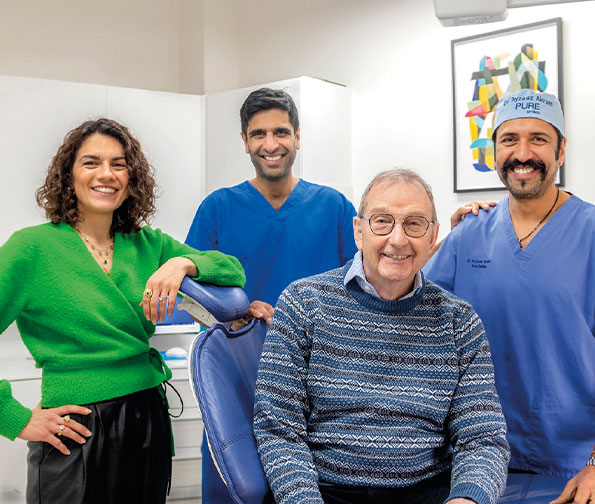
Dr Ayzaaz Akram (BDS University of Liverpool 1995, GDC 70996) leads our practice across two Fulham locations:
To book a consultation, call us on 020 7736 6276 or learn more contact us online.
—
It depends on the case. For mild misalignment, Invisalign can produce results in as little as six months, which may be faster than braces for the same case. For moderate to complex cases, traditional braces may achieve the final result in a similar or shorter timeframe because they can apply more precise forces. Your dentist will estimate the treatment duration for each option during your consultation.
Invisalign can correct mild to moderate overbites. Significant overbites or complex bite issues are typically better addressed with traditional braces, which provide more control over vertical and anteroposterior tooth movements. Your dentist will assess whether Invisalign is suitable for your specific bite.
Yes. All orthodontic treatment requires retention to prevent teeth from shifting back. Whether you choose Invisalign or traditional braces, you will need to wear a retainer after treatment is complete. This is a lifelong commitment for the best long-term results.
Generally, yes. Traditional metal braces are typically the most affordable orthodontic option. Invisalign costs more due to the custom aligner manufacturing process and the digital treatment planning involved. The exact cost difference depends on the complexity and duration of your case.
In some cases, yes. If Invisalign is not achieving the desired results or if the case proves more complex than initially assessed, your dentist may recommend transitioning to traditional braces. This is uncommon when cases are properly assessed at the outset, but it is an option if needed.