What your child eats at school directly affects their dental health and their ability to concentrate in class. Sugary snacks and drinks cause tooth decay, and the “sugar crash” that follows leads to lethargy and poor attention during afternoon lessons. Making better lunchbox choices protects both their teeth and their learning.
Almost all tooth decay in children is preventable with a healthy diet, good brushing habits, and regular dental visits. However, poor nutritional habits are becoming an increasingly serious issue. Many children consume far more sugar during the school day than parents realise.
When children eat sugary foods, bacteria in plaque produce acid that attacks tooth enamel. This process lasts approximately 20-30 minutes after each sugary snack. The more frequently sugar is consumed, the more acid attacks occur, and the less time teeth have to recover.
| Food Type | Time Stuck to Teeth | Acid Attack Duration | Decay Risk |
|---|---|---|---|
| Sticky sweets (toffees, gummy bears) | Extended (minutes to hours) | Prolonged | Very high |
| Chocolate | Brief | 20-30 minutes | Moderate |
| Fresh fruit | Brief | 20-30 minutes | Low (natural sugars + fibre) |
| Cheese | N/A | N/A (neutralises acid) | Protective |
| Crisps/crackers (starchy) | Moderate | 20-30 minutes | Moderate |
Gooey and chewy sweets are particularly damaging because they spend a prolonged amount of time stuck to teeth, extending the acid attack well beyond the usual 20-30 minutes.
Replacing just a few items in your child’s lunchbox makes a meaningful difference:
| Instead Of | Try |
|---|---|
| Chocolate biscuits | Cheese cubes or cheese strings |
| Fruit juice or squash | Water or plain milk |
| Cereal bars (often high in sugar) | Whole-grain crackers with hummus |
| Sweets or dried fruit | Fresh fruit (apple slices, grapes, berries) |
| Fizzy drinks | Water with a slice of cucumber or lemon |
| Yoghurt tubes (sweetened) | Plain yoghurt with fresh berries |
A dental-friendly lunchbox also happens to be a nutritionally balanced one:
1. Protein: Chicken, turkey, egg, cheese, or hummus
2. Complex carbohydrates: Wholemeal bread, wraps, or pasta
3. Fresh vegetables: Carrot sticks, cucumber, cherry tomatoes, pepper strips
4. Fresh fruit: One portion (not dried fruit, which is sticky and concentrated in sugar)
5. Drink: Water or plain milk
Sugary snacks give children an immediate energy spike followed by a rapid crash. This “sugar rush and crash” cycle is well-documented:
This is not the mental state children need for afternoon lessons. A lunch based on protein, complex carbohydrates, and fresh vegetables provides sustained energy without the crash.
Children who develop healthy eating habits early are far more likely to maintain them into adulthood. The same applies to dental hygiene. Here is what you can do:
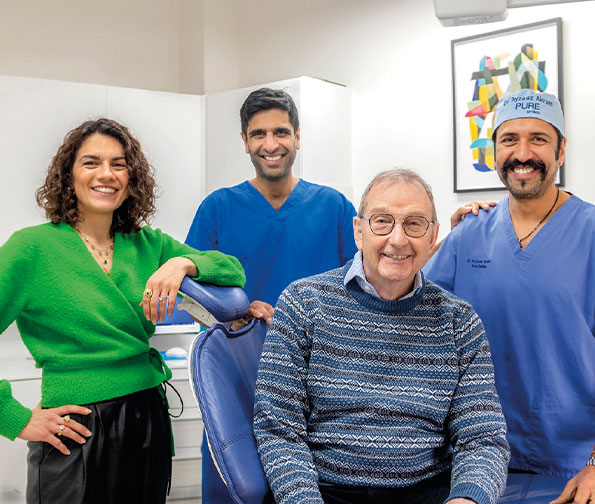
At Pure Smiles in Fulham, we make dental visits a positive experience for children. Dr Ayzaaz Akram and the team are experienced in treating children of all ages at both our New Kings Road and Fulham Road practices.
Fresh fruit contains natural sugars but also water, fibre, and essential nutrients. It is not harmful when eaten as part of a meal or as a single snack. Dried fruit, however, is concentrated in sugar and sticky, making it much more damaging to teeth. Fresh fruit is always the better choice.
The NHS recommends that children aged 4-6 have no more than 19g of free sugars per day (approximately 5 sugar cubes), and children aged 7-10 no more than 24g (6 sugar cubes). Many popular lunchbox items contain more sugar than parents expect.
Children under six should not use mouthwash. For older children, a fluoride mouthwash can be used at a different time to brushing (such as after lunch) but should not replace brushing. It should never be used immediately after brushing as it rinses away the more concentrated fluoride in toothpaste.
We recommend a first dental visit when the first teeth appear or by the child’s first birthday. Early visits help children become comfortable with the dental environment and allow the dentist to monitor development. Book your child’s appointment at Pure Smiles today.
—
Pure Smiles provides children’s dentistry in Fulham at 257 New Kings Road, SW6 4RB and 750a Fulham Road, SW6 5SH. Call 020 7736 6276 for appointments.